Iceland · Winter · Elopement guide
Winter Elopement in Iceland
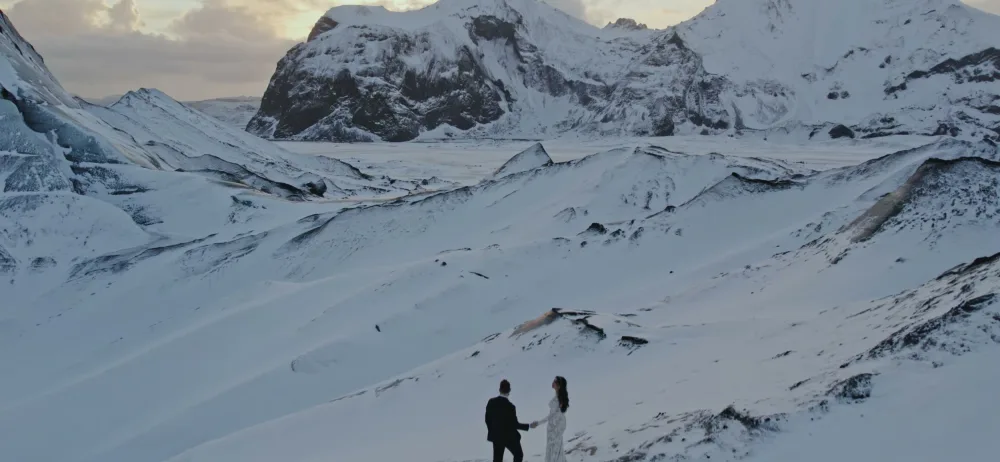
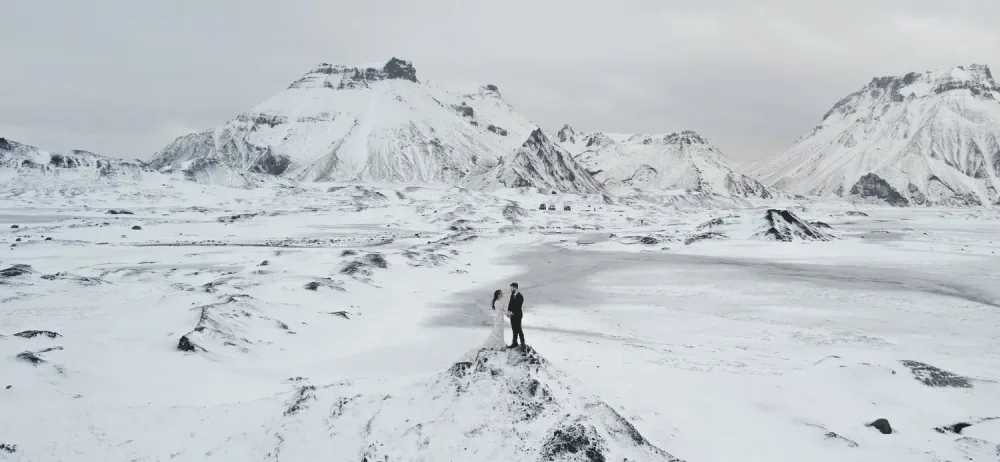
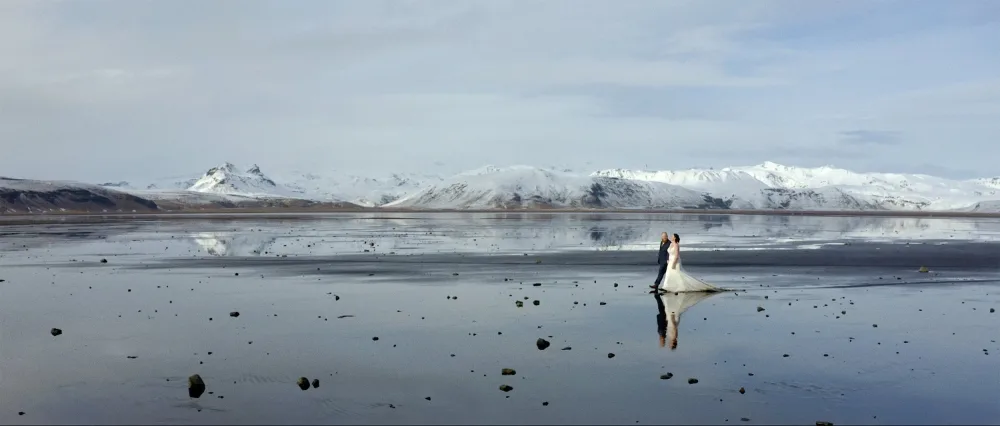
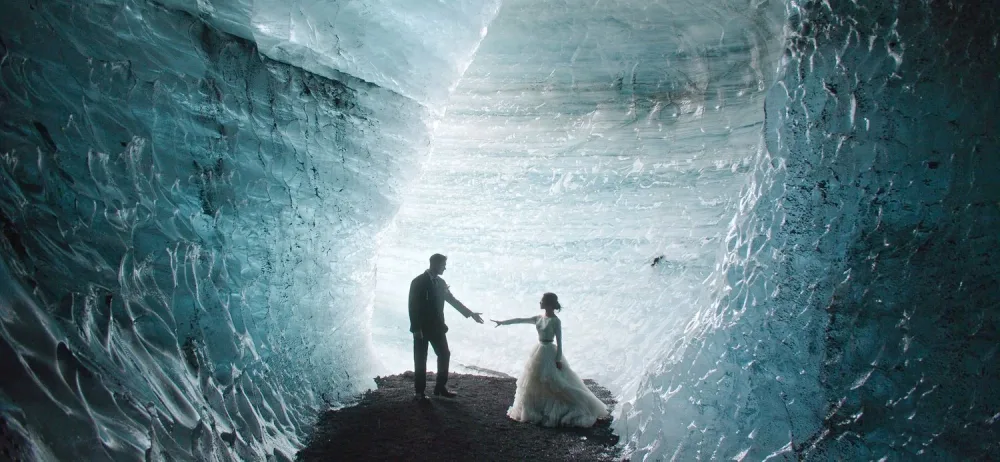
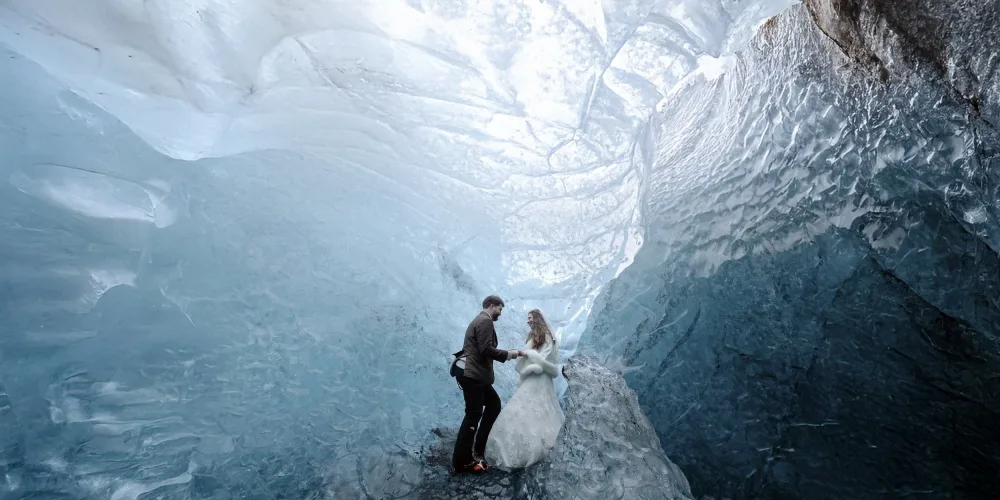
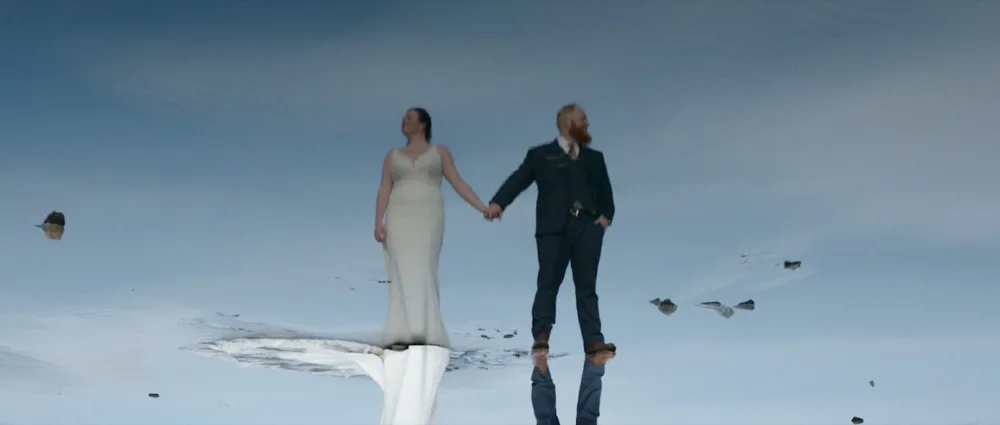
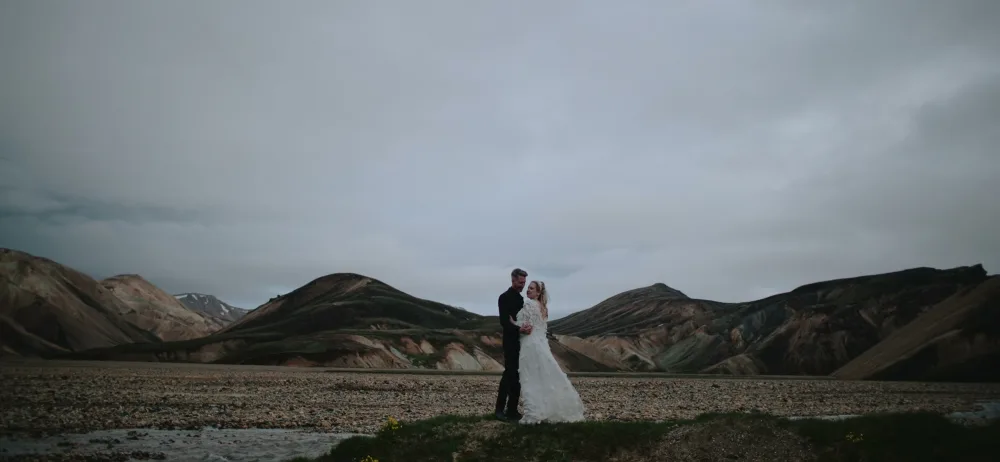
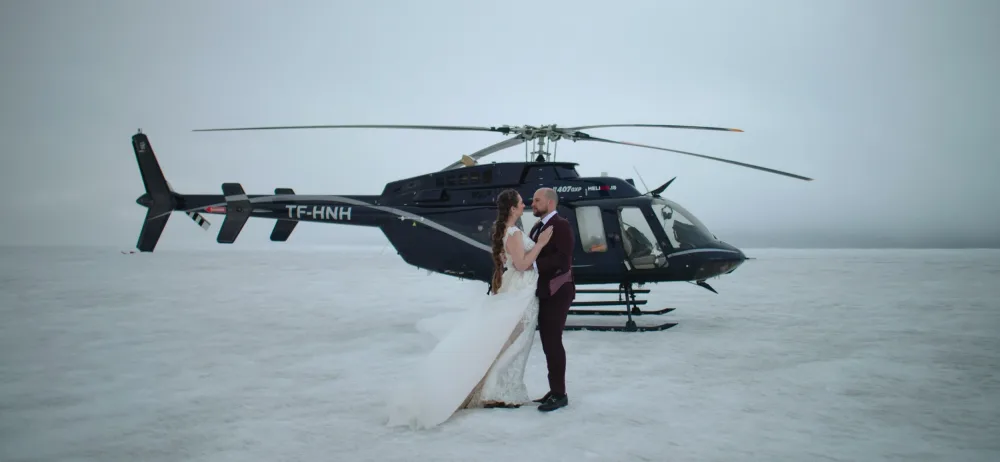
Winter is my secret favourite season in Iceland. Snow covers the black sand and the lava, the waterfalls freeze at the edges, the blue ice caves open, and the low sun turns a few hours of daylight into one long golden hour. It is also the season that needs the most careful planning. I have filmed winter elopements in ice caves, at frozen glacier lagoons and in snow at Kvernufoss – here is how to make a winter wedding work.
- When
- November to March – the darkest months are December and January
- Daylight
- About 4 hours around the winter solstice, 7 hours by early February
- Best for
- Ice caves, snow, quiet places and a chance of northern lights
- Good to know
- Storms close roads – keep the day flexible
Daylight in winter
Around the winter solstice the sun rises in Reykjavík at about half past eleven and sets around half past three – roughly four hours of daylight, with a long blue twilight on either side. By the beginning of February there are about seven hours, and by March ten. In practice this means one main place in the middle of the day and maybe a second one in the last light, rather than a long road trip.
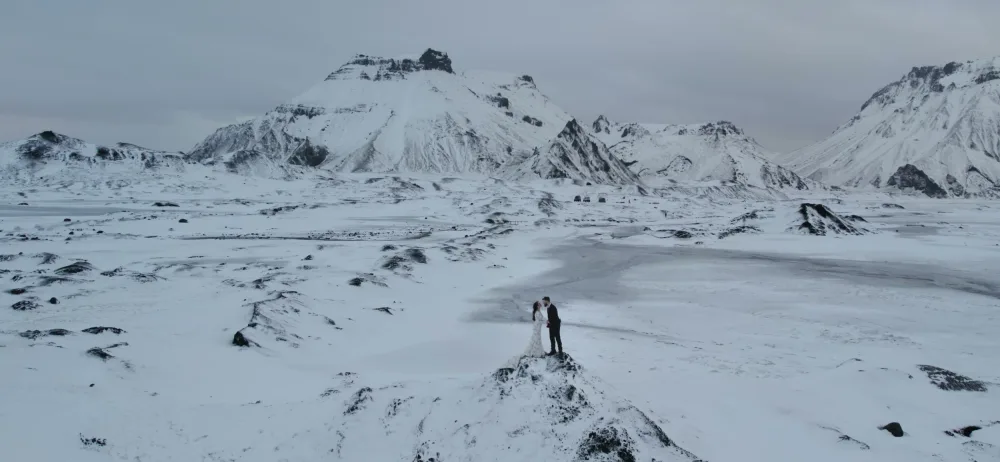
The light itself is beautiful. The sun never climbs high, so there is no harsh midday light – just soft, warm side light for hours, and pink and blue skies at both ends of the day.
What a winter elopement can look like
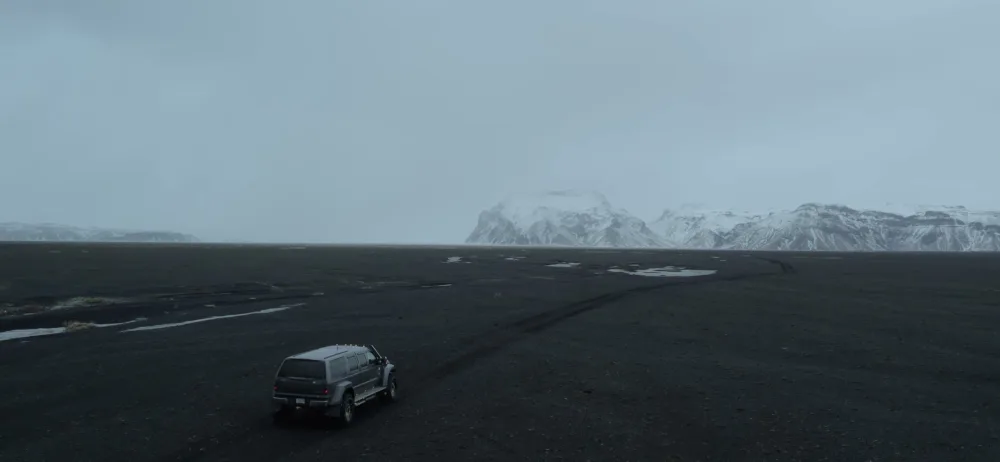
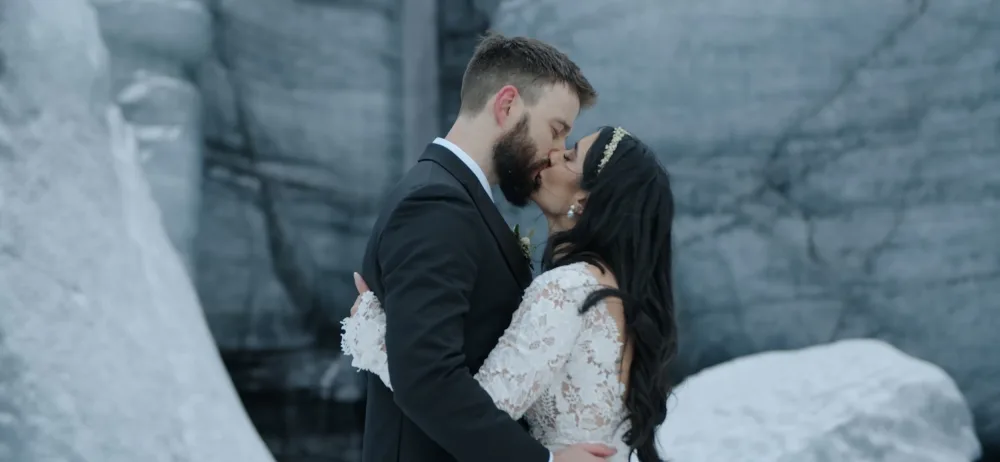
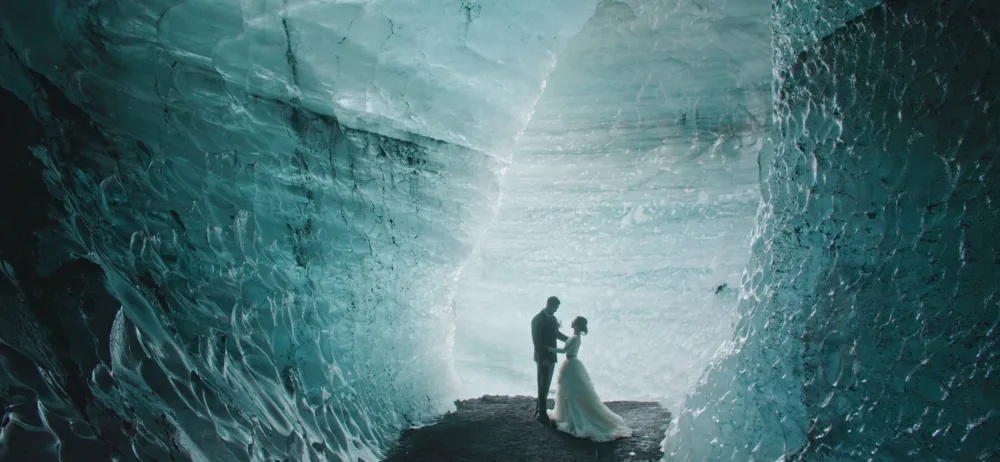
Lauren and Dave eloped in January. They got ready at Hótel Kría in Vík, took a super-jeep across the snow to the Katla ice cave for their ceremony, and then spent the rest of the day exploring the South Coast – Kvernufoss, Reynisfjara, the snow-covered lava fields and Fjaðrárgljúfur canyon.
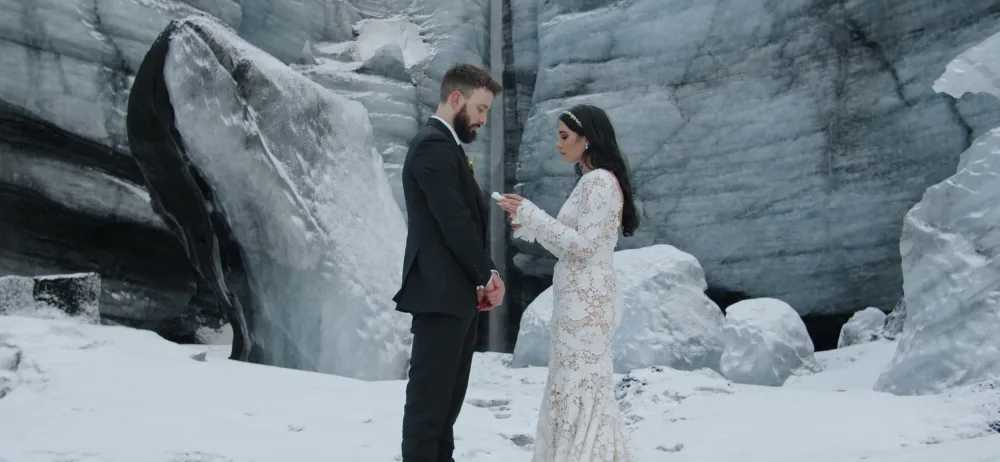
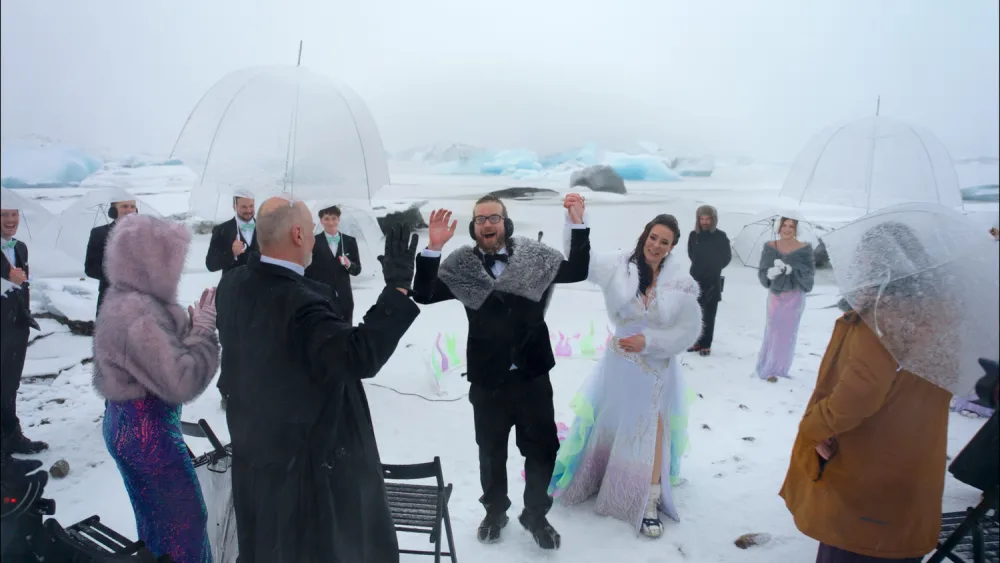
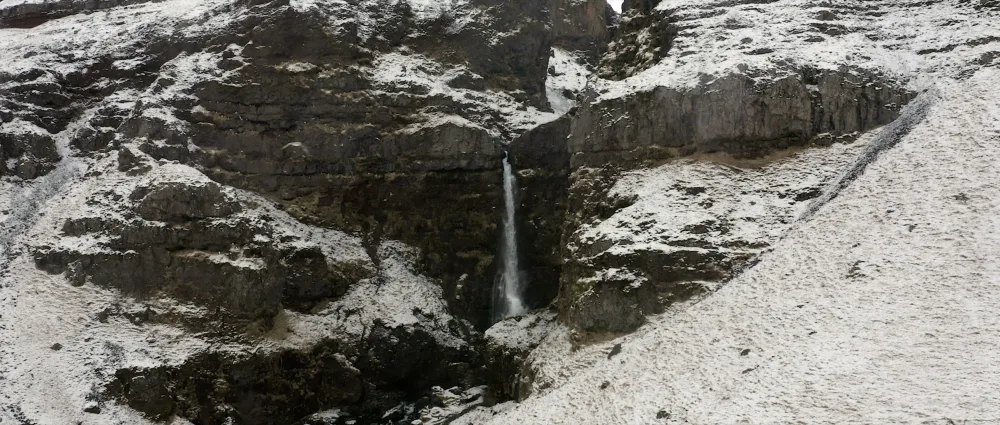
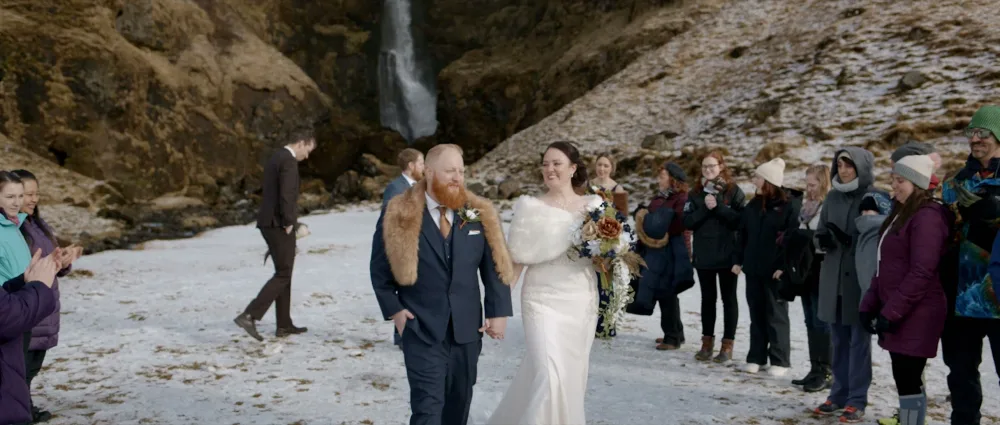
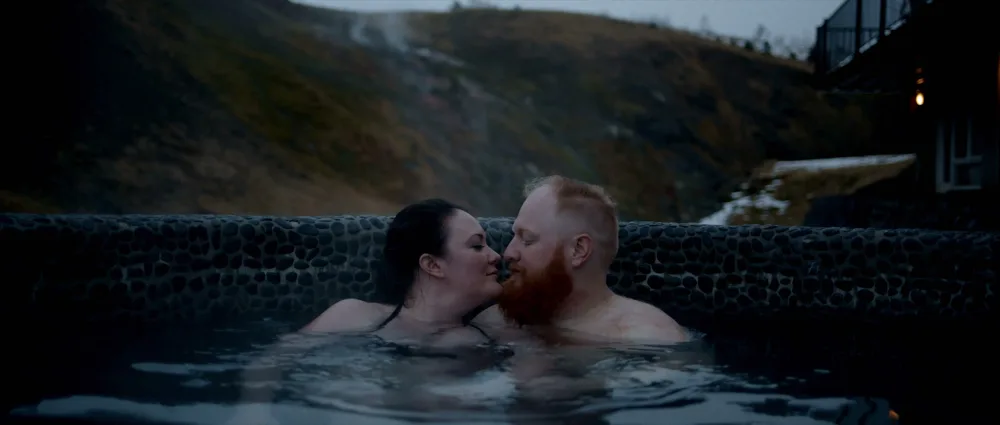
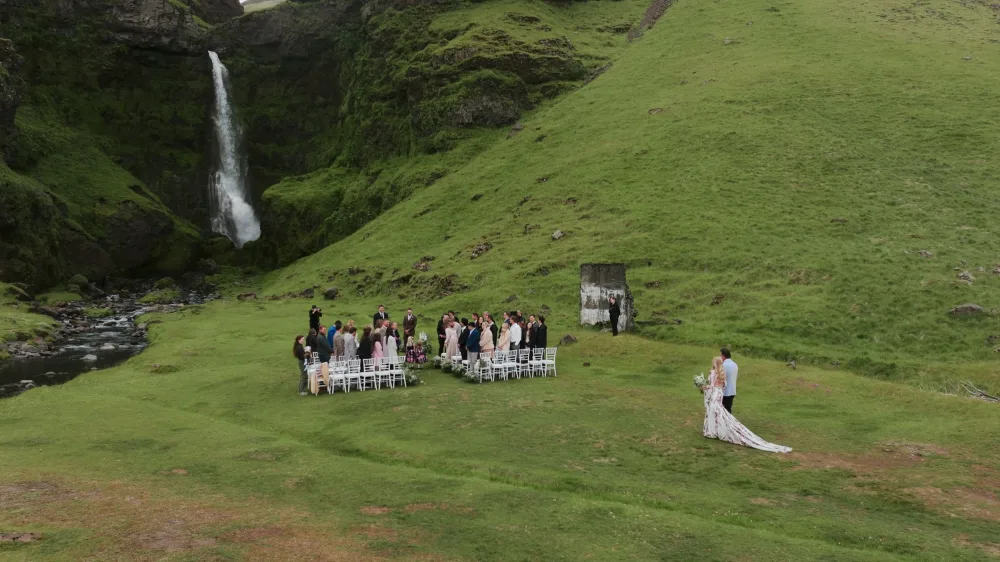
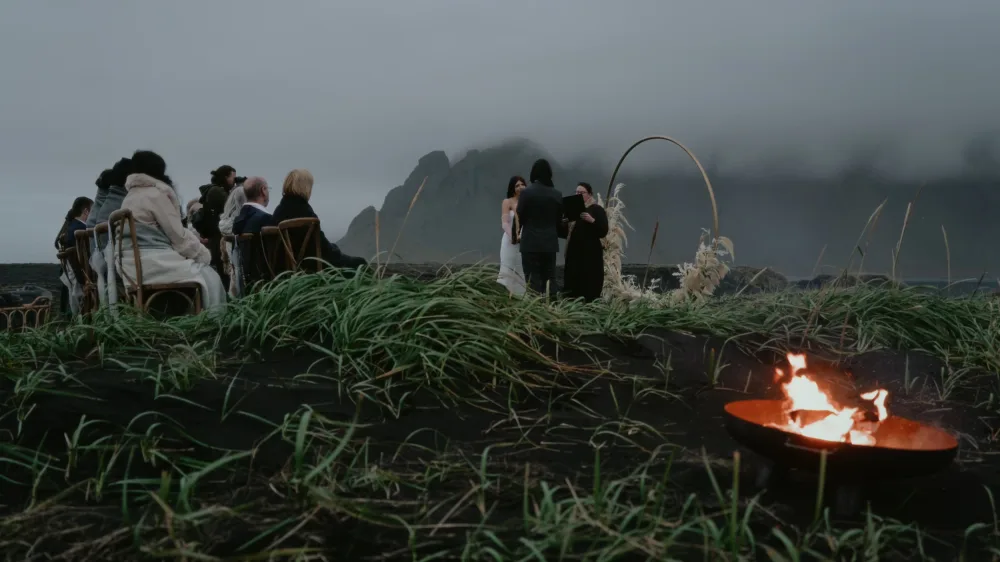
Sarah and Greg planned a spring elopement and woke up to fresh snow. Their pagan ceremony at Kvernufoss became a winter wedding, their guests toasted with champagne in the snow, and the day ended with the two of them in a hot pool as the evening came.
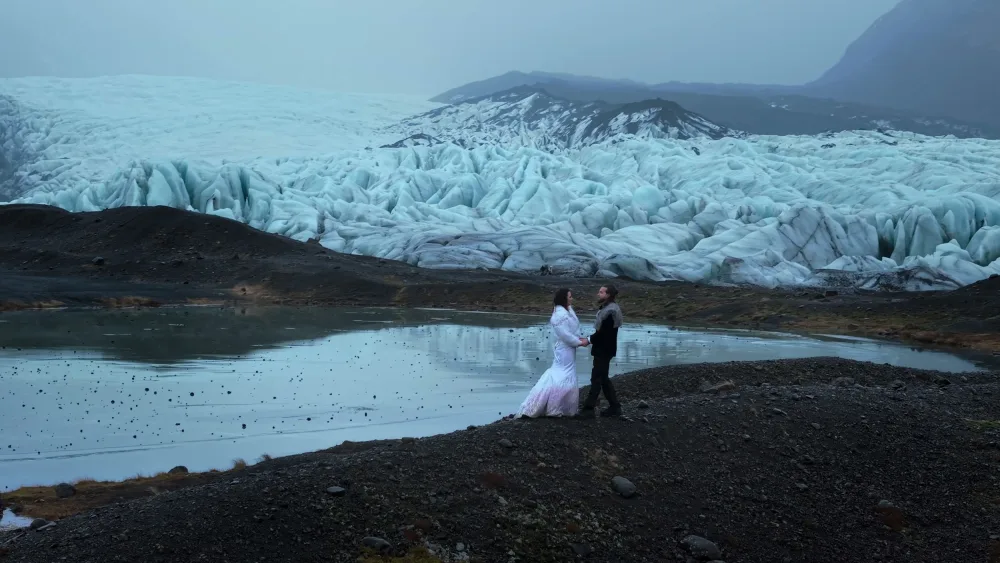
And Amanda and Lucas married in February at Fjallsárlón, on a frozen glacier lagoon covered in snow – I write about their day in my Jökulsárlón guide.
Ice caves – only in winter
Winter is the season of the blue ice caves of Vatnajökull, open with licensed guides from about mid-November to mid-March, depending on conditions. The Katla ice cave near Vík can be visited all year. More in my guide to ice cave weddings.
Roads, weather and planning
- Check every day: road conditions on umferdin.is (or by phone on 1777) and the weather on vedur.is. The Met Office issues yellow, orange and red warnings up to five days ahead.
- Mountain roads: the Highlands and F-roads are closed all winter. The Ring Road along the South Coast, the Golden Circle and Snæfellsnes are the usual winter areas.
- Driving: rental cars should come with winter tyres; studded tyres are allowed only in the cold months. Many couples prefer a local driver or a super-jeep for the wedding day.
- Keep a spare day: a storm can close roads for a day. A flexible date – or a back-up day – takes all the stress away.
- Dress warmly: thermal layers under the dress, a proper coat, warm boots for walking and something to change into for the photos. Hand warmers help.
Christmas and New Year
The weeks around Christmas are magical in Reykjavík, with lights everywhere and the thirteen Yule Lads arriving one by one from 12 December. On New Year’s Eve the city lights bonfires in its neighbourhoods and the sky fills with private fireworks at midnight. Just remember that daylight is at its shortest and many places run shorter hours over the holidays.
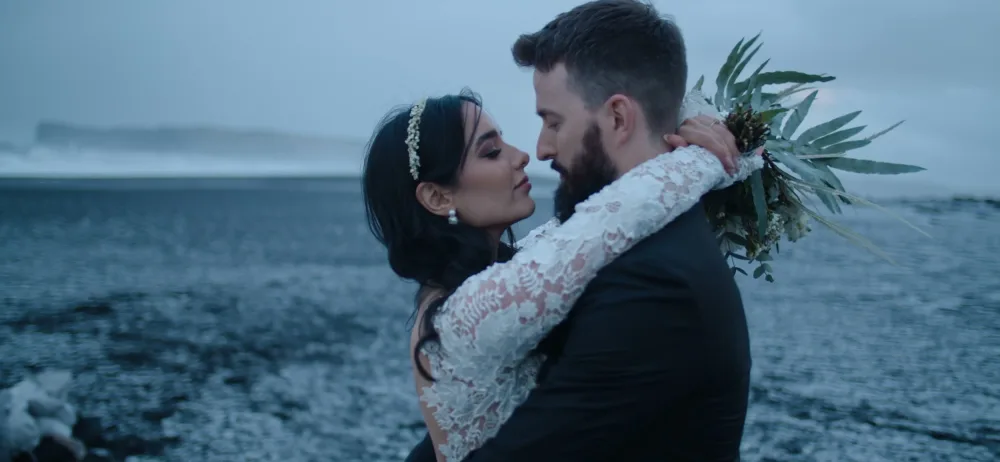
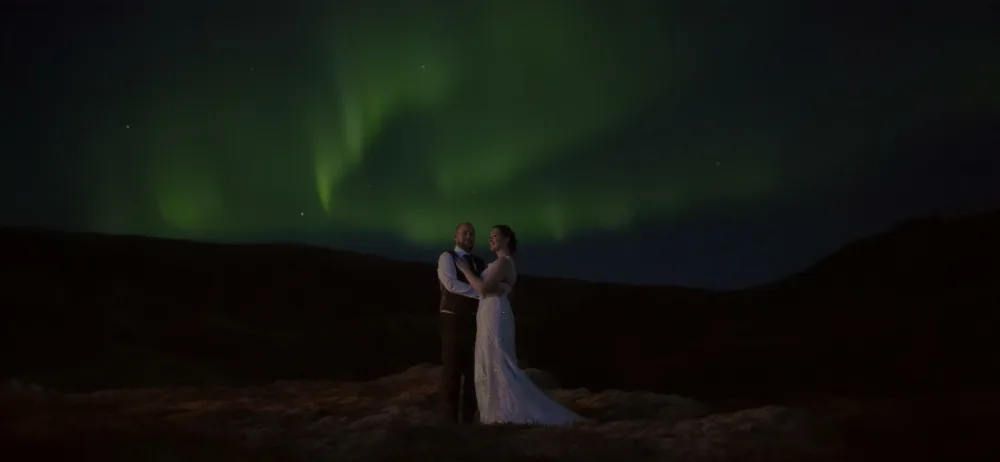
On a clear winter night there is always a chance of the northern lights – see my guide to a northern lights elopement. For the legal side, see how to elope in Iceland.
Planning your elopement in winter?
Tell me your date and place – I’ll let you know if I’m free.
Check your dateQuestions about winter elopements in Iceland
How much daylight is there in Iceland in winter?
Is it safe to drive in Iceland in winter?
Can we get married in an ice cave in winter?
More places to get married in Iceland
All the best places to elope in Iceland · How to elope in Iceland