Iceland · South Coast · Location guide
Black Sand Beach Wedding in Iceland
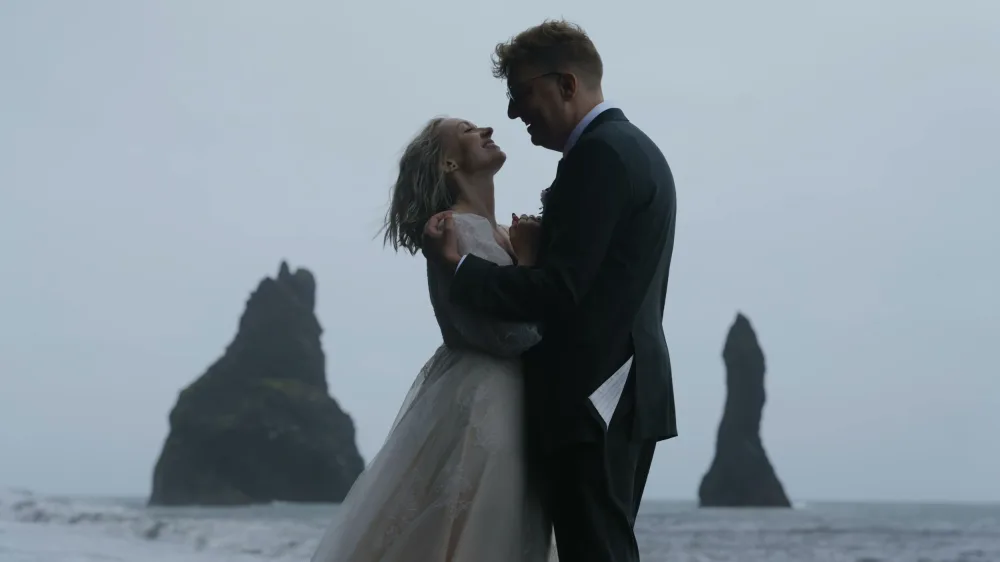
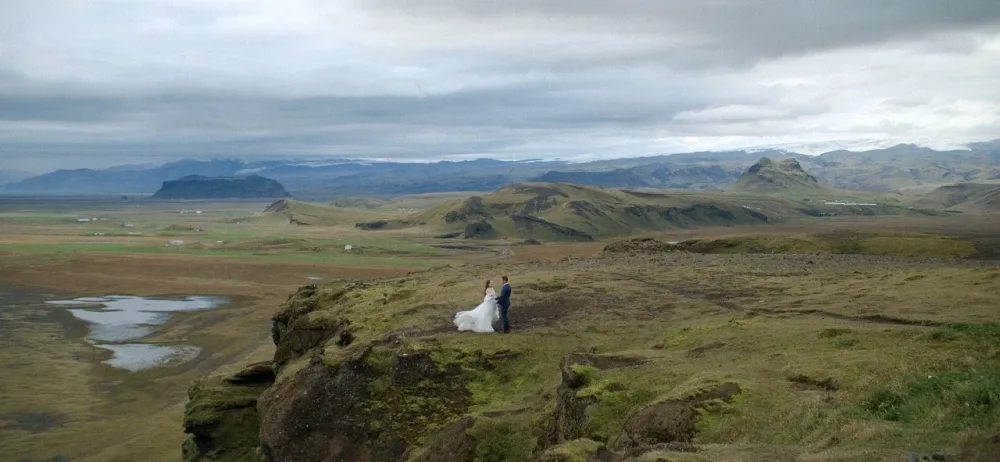
The black beaches around the village of Vík are the Iceland most couples picture first: basalt columns, sea stacks rising out of the Atlantic and sand as dark as ink. I have filmed more than a dozen ceremonies and elopements in this corner of the South Coast in the last few years – on Reynisfjara and Víkurfjara, on the cliffs of Dyrhólaey and inside the Gígjagjá cave. This is what I have learned about getting married here.
- Where
- Around Vík, South Coast – about 2.5 hours’ drive from Reykjavík
- Best for
- Elopements and small weddings with a dramatic coastline
- When
- All year; puffins on Dyrhólaey from late April to mid-August
- Good to know
- Powerful waves – the beaches have a warning light system
Reynisfjara
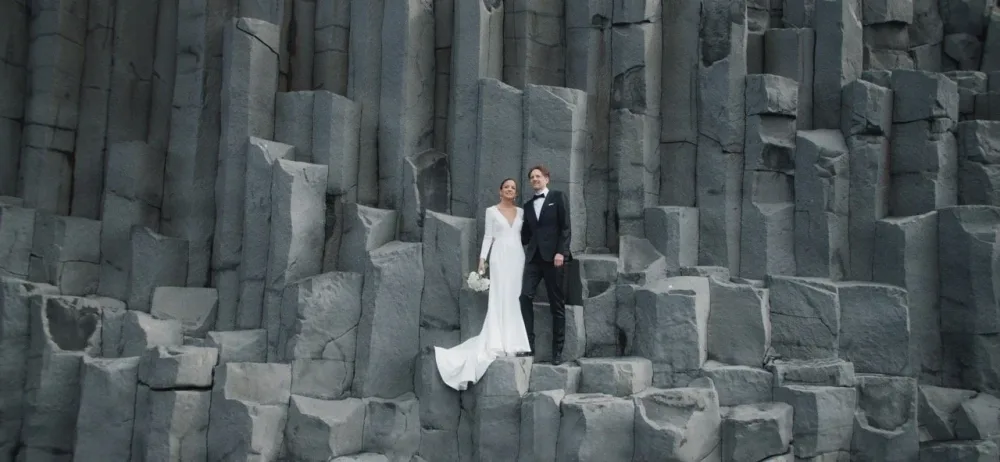
Reynisfjara is the famous one: a long black beach below Reynisfjall mountain, with a wall of basalt columns, the Hálsanefshellir cave and the Reynisdrangar sea stacks just offshore. It is about ten minutes’ drive west of Vík. It is also one of the busiest places in Iceland – tour buses arrive from late morning to mid-afternoon – so I plan ceremonies and portraits here for the early morning or the evening, when the light is softer and the beach is almost empty.
The waves at Reynisfjara are the real reason to plan carefully. So-called sneaker waves can run far up the beach without warning. There is a warning light at the entrance: yellow means take care, orange means stay at least 25 metres from the sea, and red means the beach is closed and only the viewing area is open. Since 2025 the red light also closes the basalt columns and the cave. I always check the conditions on the day and keep a second place ready nearby.
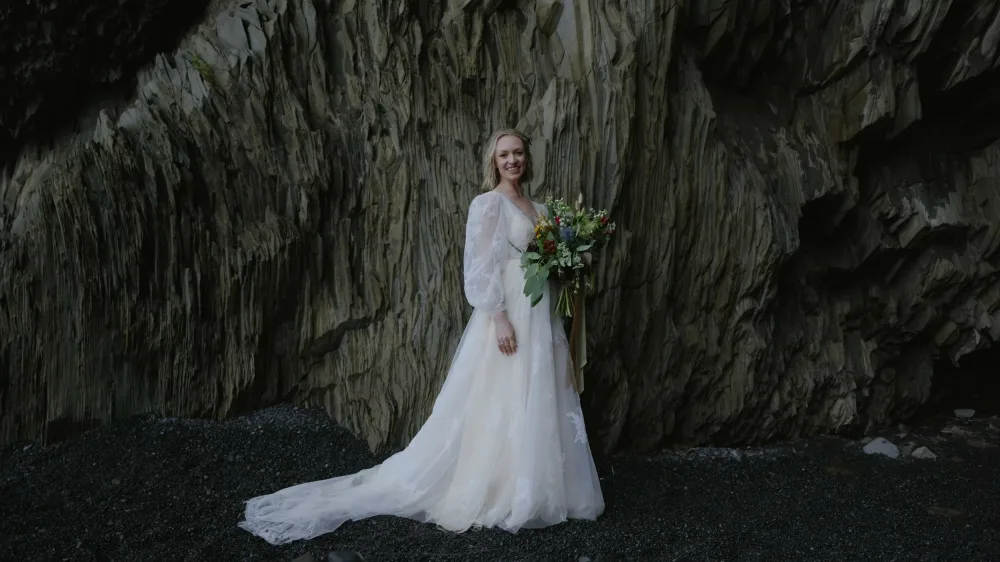
Víkurfjara, the beach in Vík
Right below the village, a five-minute walk from the centre, Víkurfjara looks across to the same Reynisdrangar sea stacks from the other side. It is free, easy to reach with guests and usually calmer than Reynisfjara. The waves are just as strong, so the same rule applies: we stay well back from the water and never turn our backs on the ocean, especially with a long dress or veil.
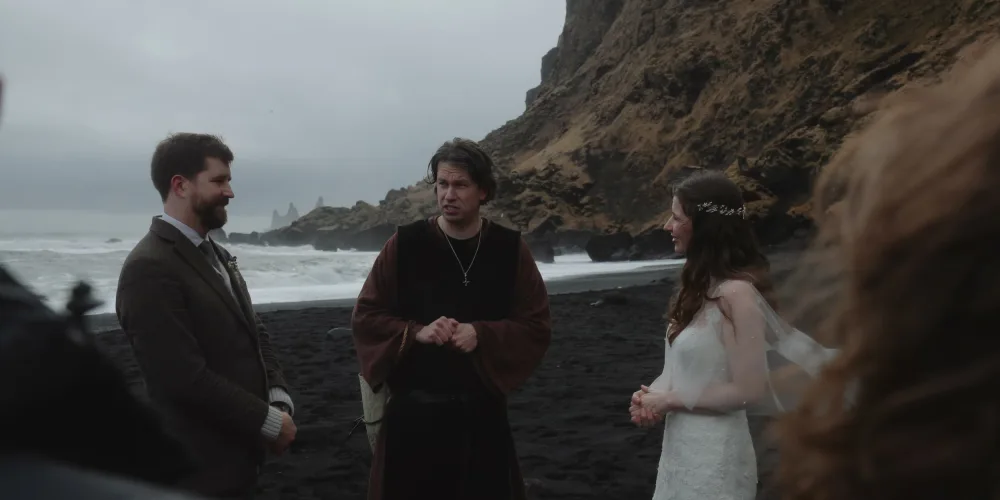
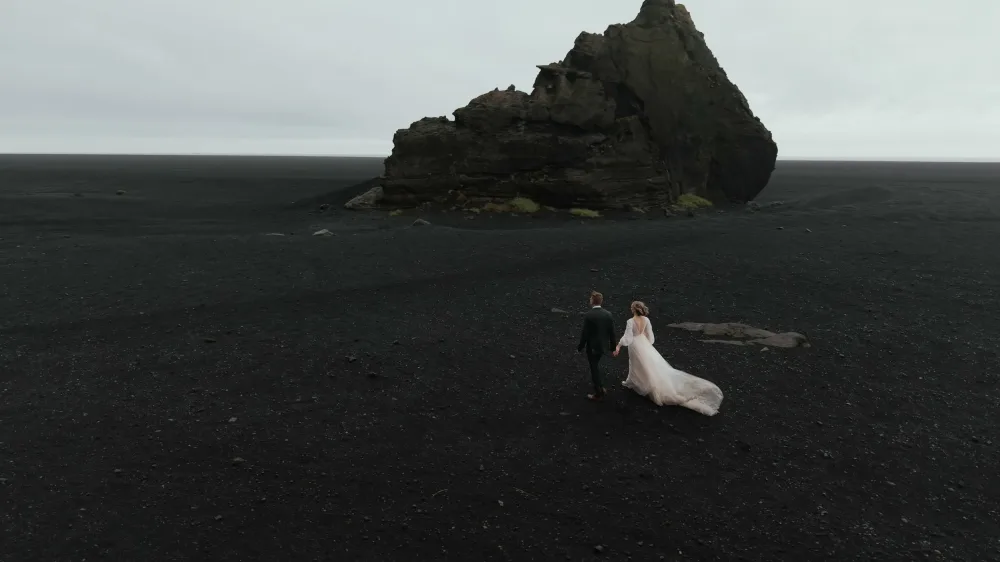
Further east, the black sand plains around Hjörleifshöfði feel even wilder – a flat desert of black sand with a lonely rock headland in the middle of it.
Dyrhólaey
A short drive west of Reynisfjara, the Dyrhólaey headland rises above the coast with a huge rock arch, a white lighthouse and views along the whole beach in both directions. In summer it is one of the easiest places in Iceland to see puffins, usually from late April to mid-August.
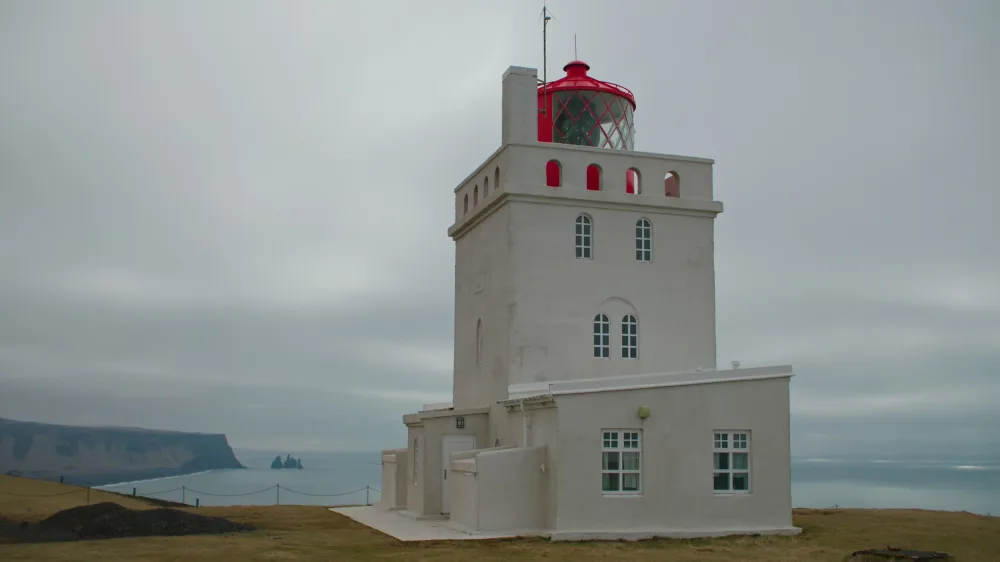
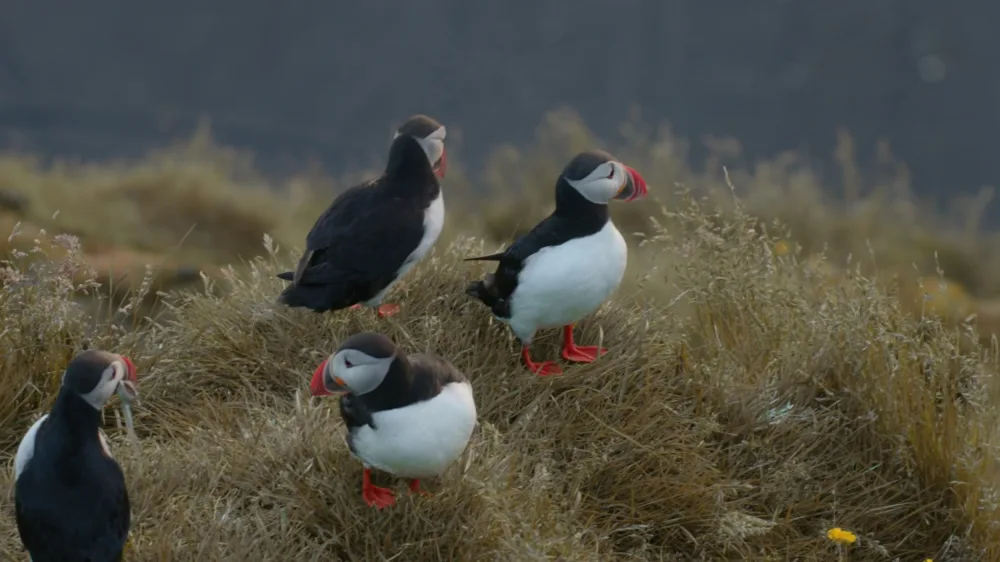
Dyrhólaey is a nature reserve, and access is limited during the nesting season – roughly from May to late June, when the upper area is usually open only during the day. The road up to the lighthouse is steep gravel and can be closed by ice or strong wind in winter. A drone here needs a professional permit from the Nature Conservation Agency, which I arrange in advance when a couple wants aerial shots.
Gígjagjá, the Yoda Cave
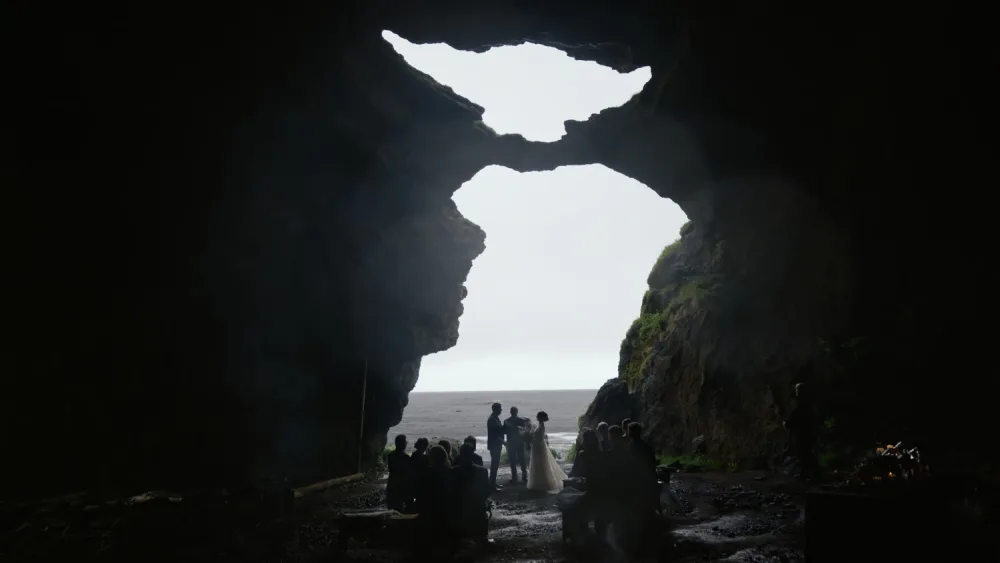
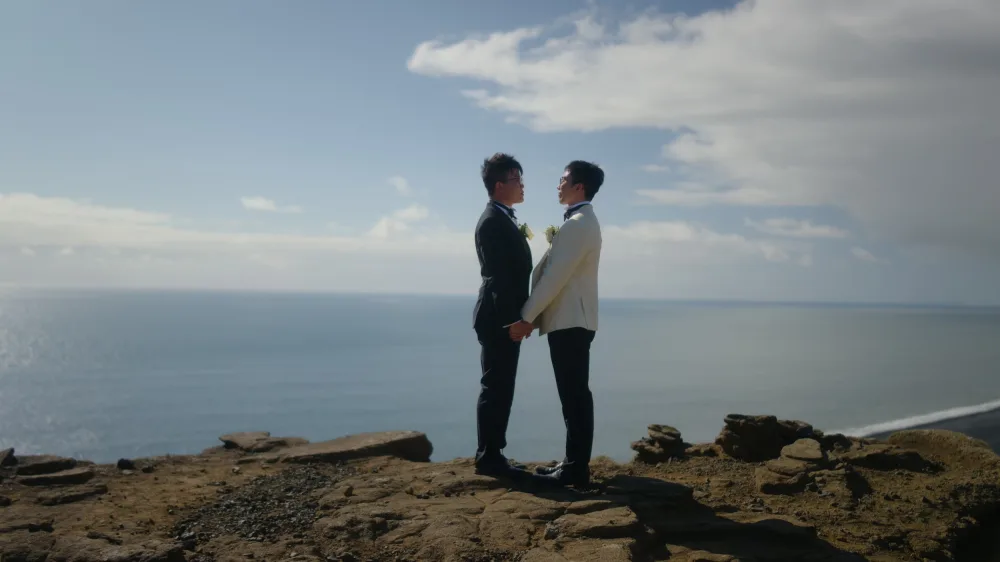
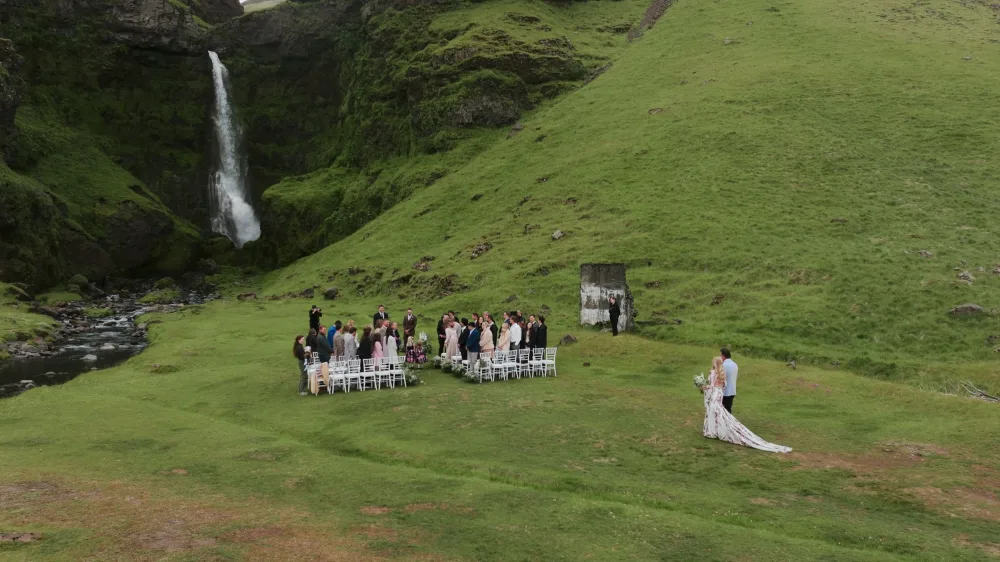
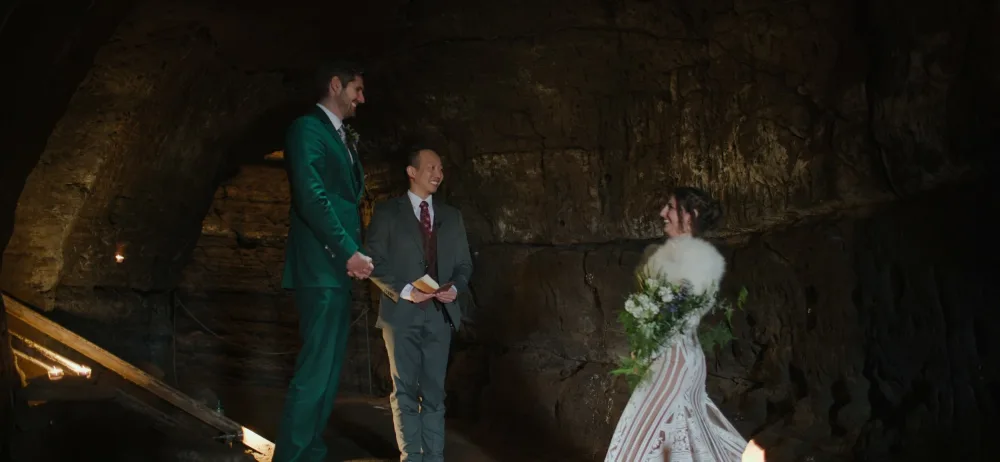
About fifteen minutes east of Vík, at the foot of Hjörleifshöfði, a cave opens towards the sea in a shape that looks remarkably like Yoda’s head. It is sheltered from wind and rain, which makes it my favourite plan B on this part of the coast. Alli and Michael had planned their ceremony at a waterfall, but with a wet forecast we moved it here at the last moment – fifteen guests under the rock arch, a cellist and a violinist, and the ocean behind them.
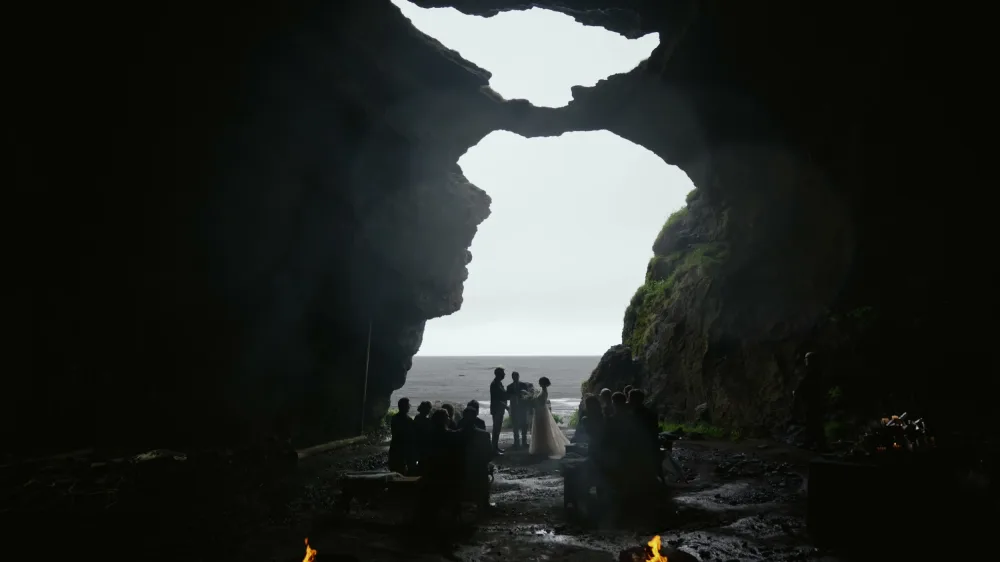
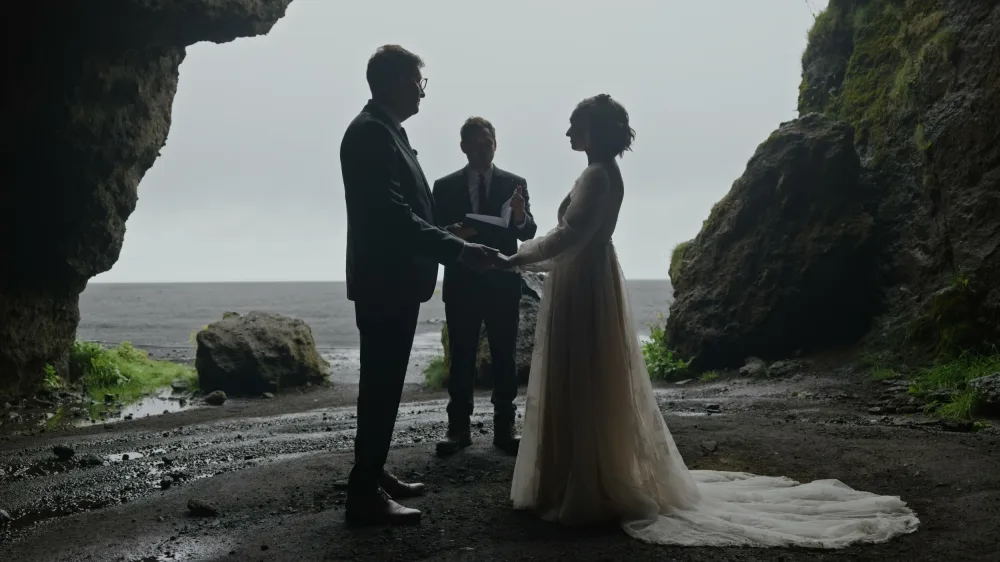
The cave is on private land and the last stretch is a gravel road, usually fine for a normal car in summer. A ceremony there needs the landowner’s permission, which your planner arranges as part of the booking.
Planning the day
- Stay nearby. Vík is about 2.5 hours from Reykjavík, so most couples spend a night or two on the South Coast. My couples have stayed at Hotel Katla, Hótel Kría in Vík and Umi Hotel under Eyjafjöll.
- Choose the time of day. Early morning and evening are quiet; midday is busy at Reynisfjara. In June there is light almost all night, in December only four to five hours.
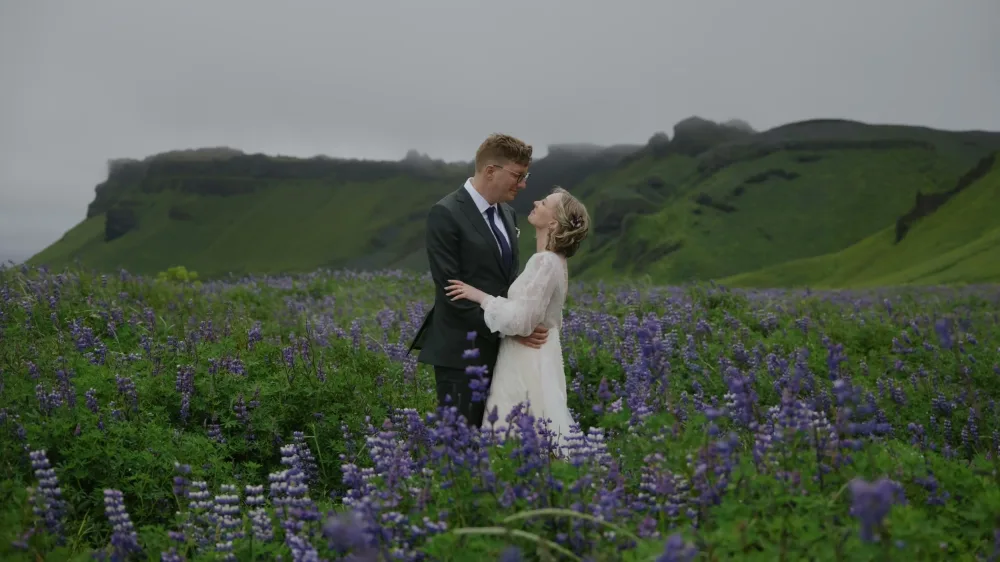
- Combine places. A typical day here combines a ceremony at one place with portraits at two or three others – the beaches, Dyrhólaey and the green slopes and summer lupine fields behind Vík are all within a short drive.
- Dress for wind. It is often windy and cool even in summer. Warm layers for guests and a coat for the bride make the day much more comfortable.
For the legal side, the best season and everything else couples usually ask me, see my guide on how to elope in Iceland.
Planning your elopement on a black sand beach?
Tell me your date and place – I’ll let you know if I’m free.
Check your dateQuestions about black sand beach weddings
Can we get married on Reynisfjara beach?
Is Reynisfjara dangerous?
When can we see puffins at Dyrhólaey?
What happens if it rains on our wedding day?
How far is Vík from Reykjavík?
More places to get married in Iceland

All the best places to elope in Iceland · How to elope in Iceland