Iceland · Month by month · Elopement guide
The Best Time to Elope in Iceland
Every couple asks me the same question first: when should we come? I have filmed weddings in Iceland in every month of the year – in the snow in January, under the midnight sun in June and under the northern lights in September. There is no single best month, but there is a best month for you, depending on what you dream of seeing and how much adventure you want. Here is what each season really looks like, and when my couples actually choose to get married.
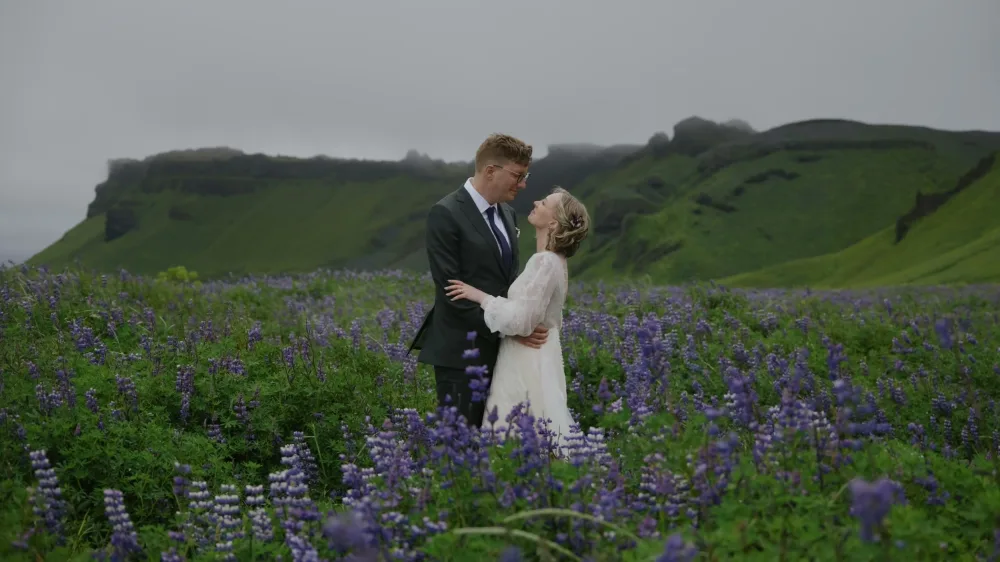
- Most popular
- June, July and September
- Midnight sun
- Mid-May to late July – barely any darkness
- Northern lights
- Late August to mid-April, on dark, clear nights
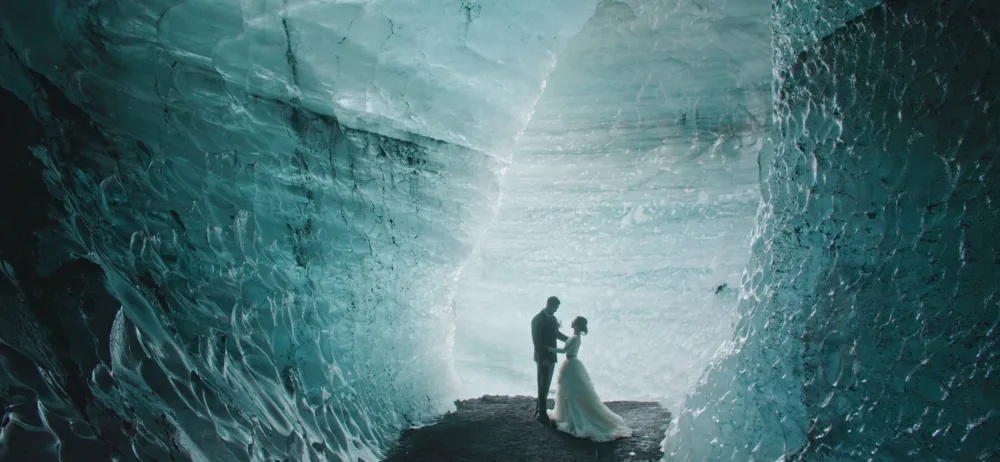
- Ice caves
- Vatnajökull from about mid-November to mid-March; the Katla ice cave all year
When my couples get married in Iceland
These are the 108 Iceland weddings and elopements in my film archive from 2017 to 2026, by month. Summer is the clear favourite, but September has become my second busiest month – and every winter month has its couples too.
Iceland month by month
| Month | Daylight in Reykjavík | My weddings | Good for |
|---|---|---|---|
| January | about 5 hours | 1 | Ice caves, snow, northern lights |
| February | about 8 hours | 5 | Ice caves, frozen lagoons, northern lights |
| March | about 11 hours | 5 | Last ice caves, snow, long golden light |
| April | about 14 hours | 7 | Quiet roads, last snow, first puffins |
| May | about 18 hours | 8 | Spring green, puffins, few visitors |
| June | about 21 hours | 20 | Midnight sun, lupins, puffins |
| July | about 20 hours | 25 | The Highlands, warmest weather, lupins |
| August | about 16 hours | 10 | The Highlands, first dark nights |
| September | about 13 hours | 16 | Autumn colours, northern lights, fewer people |
| October | about 10 hours | 8 | Northern lights, autumn storms and calm days |
| November | about 6 hours | 2 | Ice caves open, northern lights |
| December | about 4 hours | 1 | Christmas lights, ice caves, long twilight |
Daylight is the time between sunrise and sunset in the middle of the month; in summer the twilight is so bright that it never really gets dark.
Summer: June, July and August
Summer is when most couples come, and it is easy to see why. From mid-May to late July the sun barely sets – in late June it dips below the horizon for only about three hours, and the light between sunset and sunrise is a long, soft glow. That means you can have your ceremony at 10 pm with nobody else around, which is my favourite trick for the busy places on the South Coast.
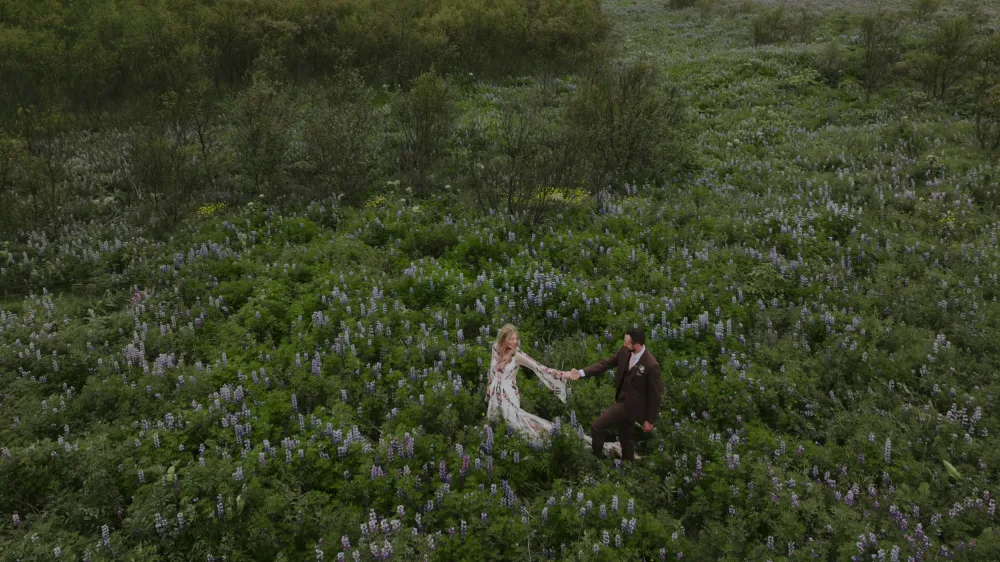
June
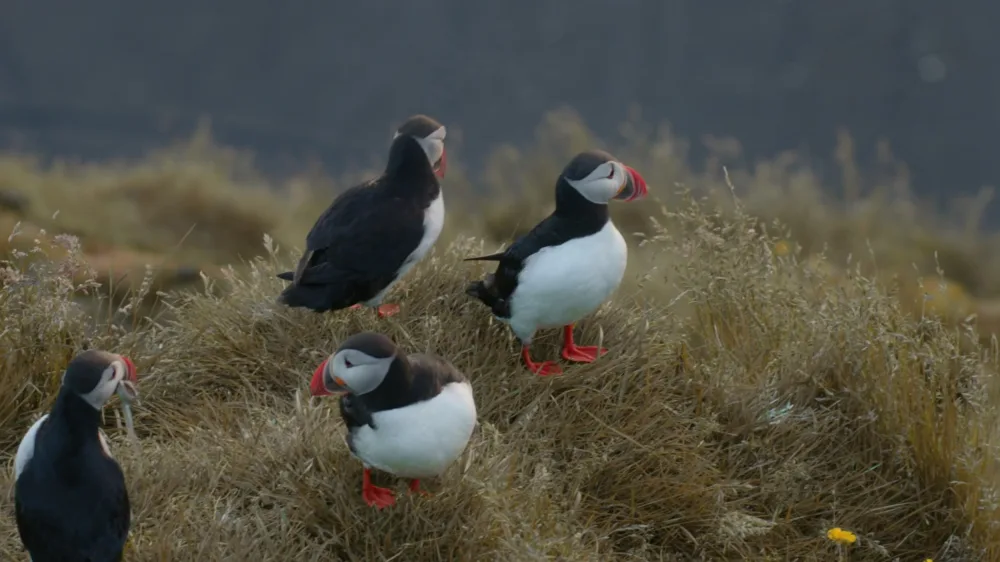
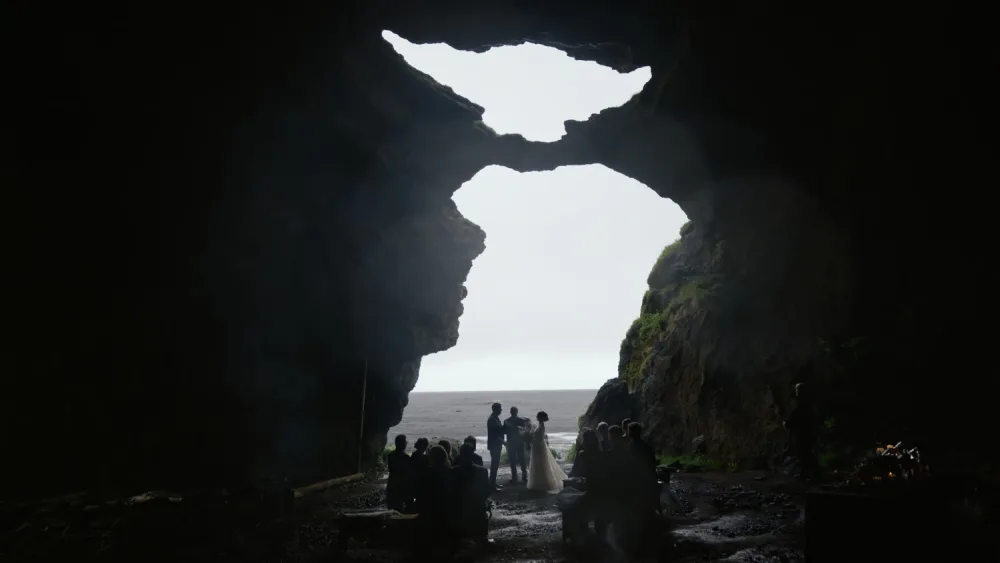
June is green, bright and full of flowers. The purple lupins bloom from about early June to mid-July, the puffins nest on the cliffs of Dyrhólaey, and the midsummer light is magical. Lady May and Derek eloped in the green canyon of Þakgil in early June, and Alli and Michael married in the Yoda Cave near Vík at the end of June.
July
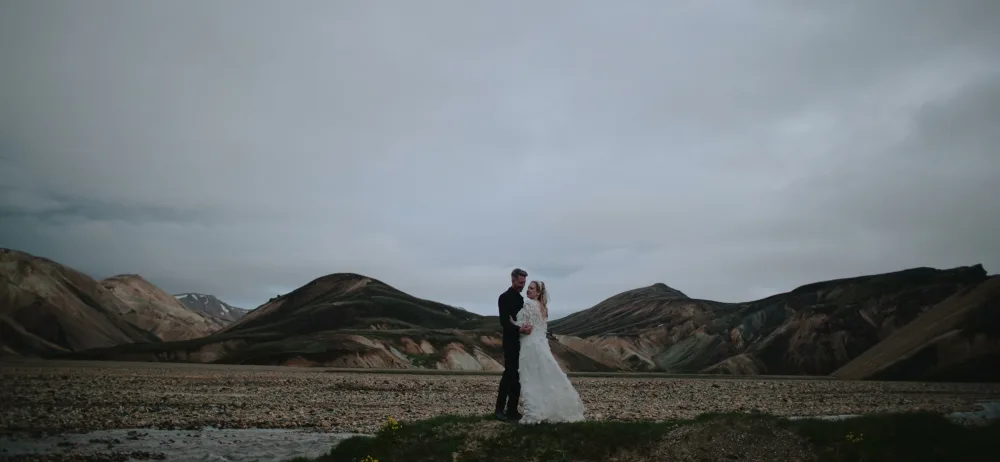
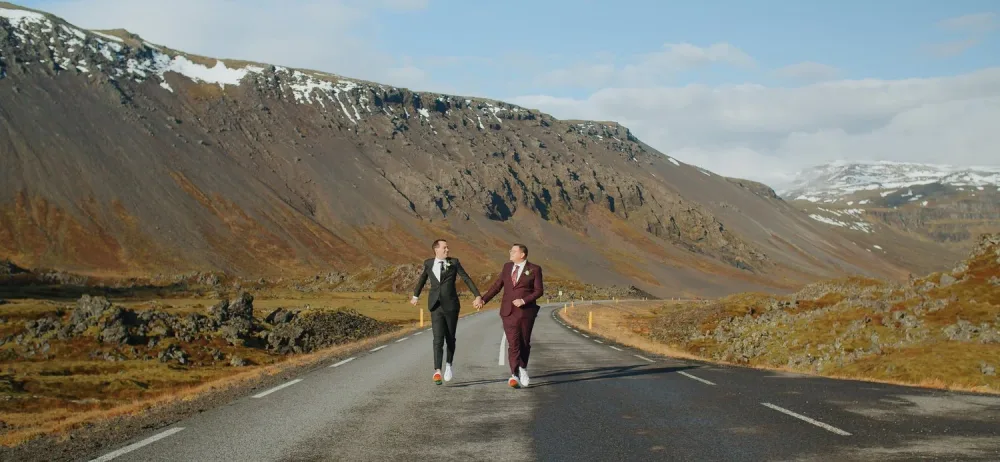
July is my busiest month and the warmest of the year, although warm in Iceland still means a jacket. It is also the month the Highlands are fully open: the mountain F-roads usually open between mid-June and early July, depending on snow, and close again in early to mid-September. Landmannalaugar, Þórsmörk and Kerlingarfjöll are at their best now.
August
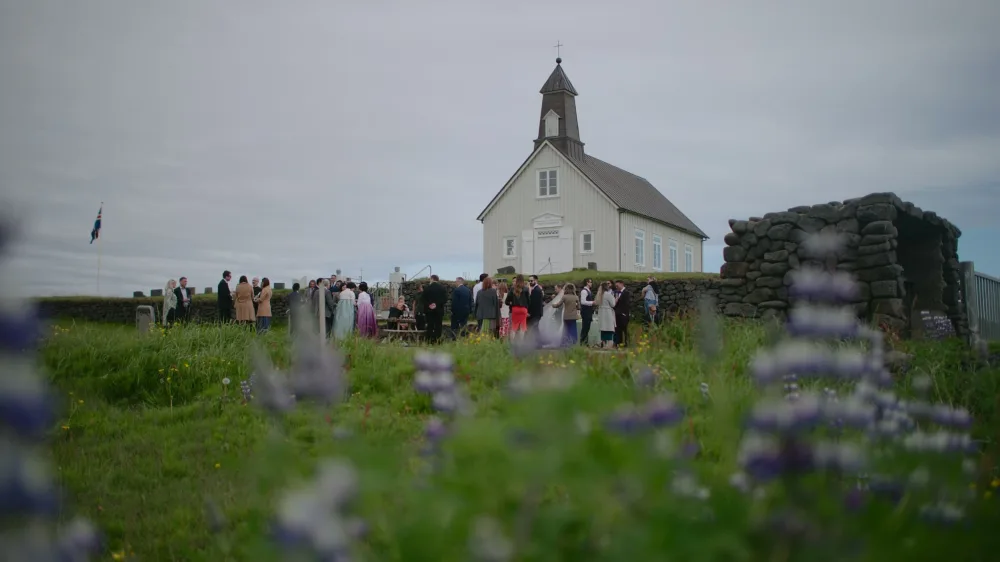
August still has long days, but by the middle of the month the nights start to get dark again – and with them comes the first chance of the northern lights. Vivian and Cliff walked into the Katla ice cave in August, which can be visited all year.
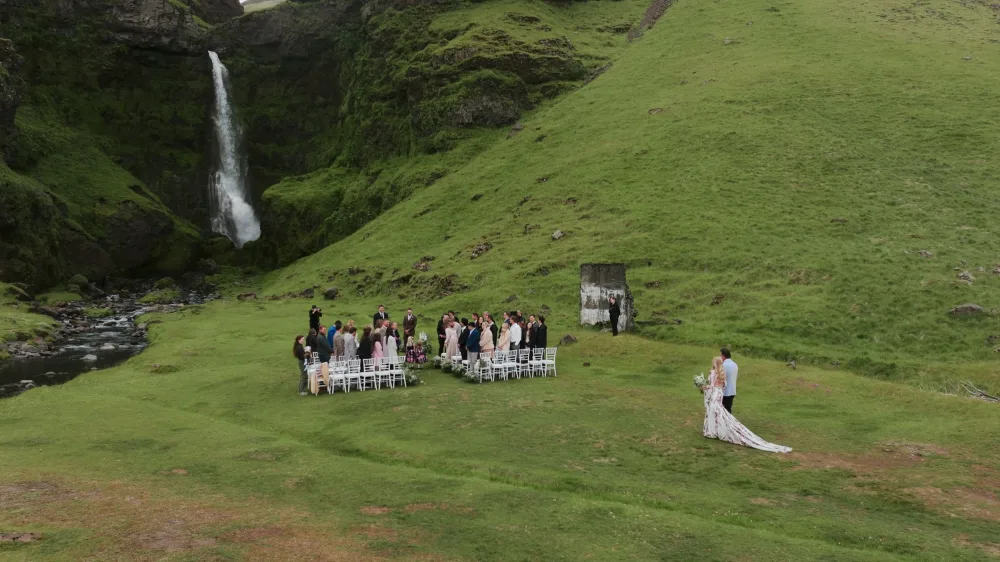
The one downside of summer is that it is also the busiest tourist season. With a little planning – an early or late ceremony, a quieter waterfall such as Írafoss or Kvernufoss – you can still have places to yourselves.
Autumn: September and October
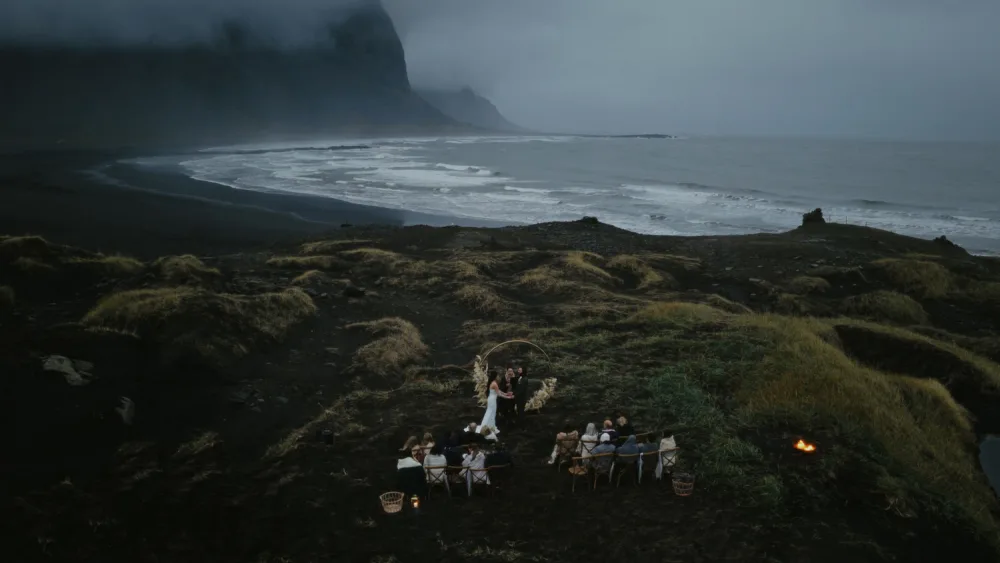
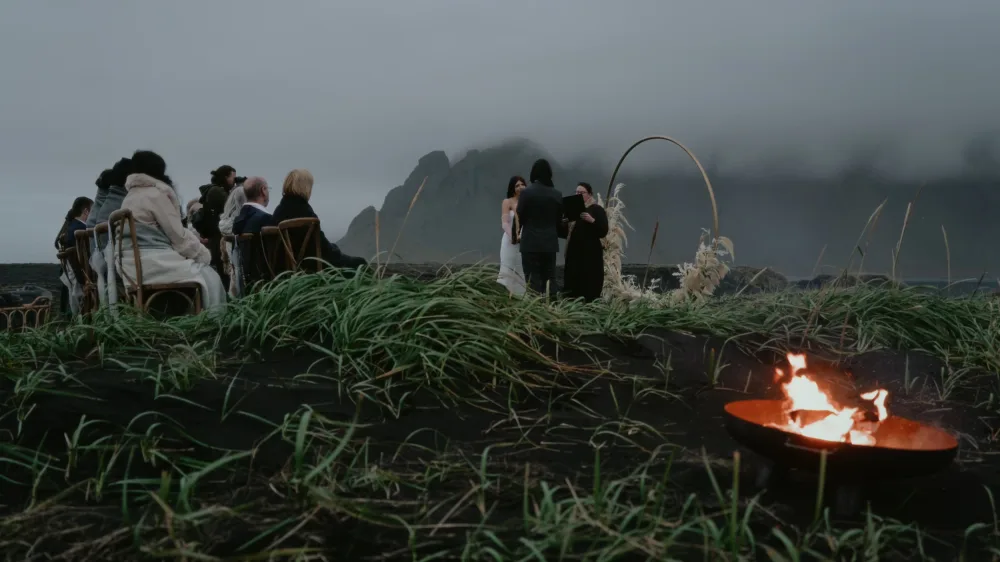
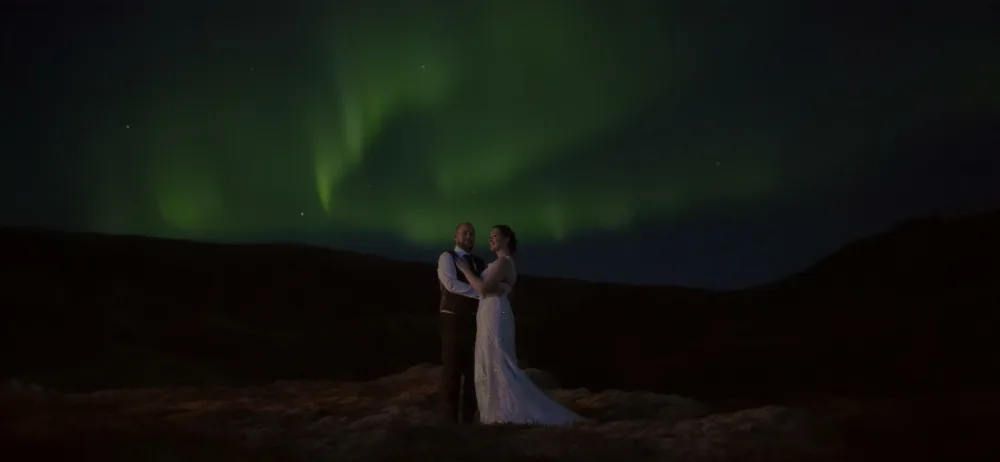
September is the month I recommend most often. The days are still long, the summer crowds are gone, the moss and the birch woods turn gold and red, and the nights are dark enough for the northern lights. Anna and John married at Vestrahorn at the end of September and saw the aurora over their wedding party that same night.
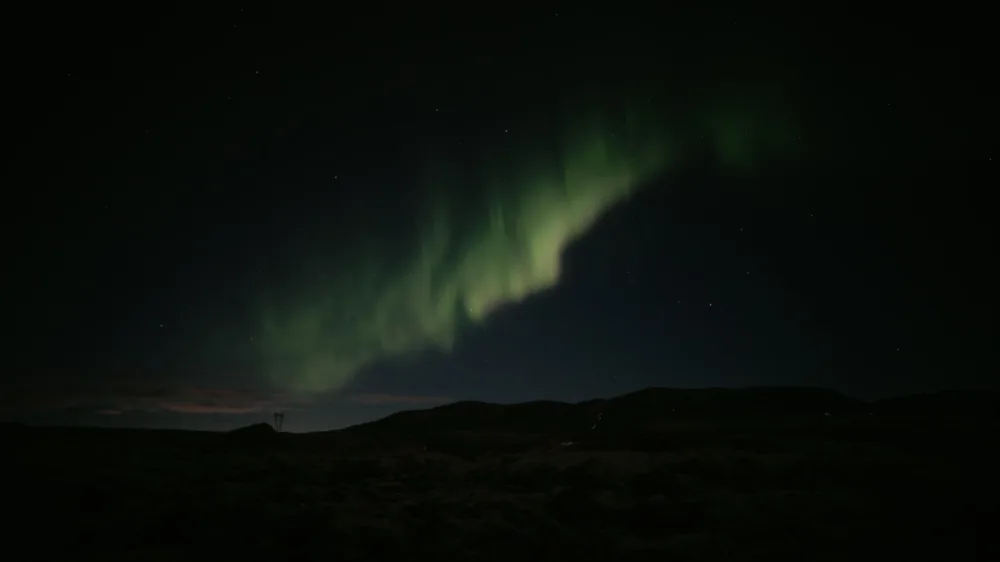
October is more of a gamble: you can have bright, calm, frosty days or the first proper autumn storms, and the Highlands are closed. But it is beautifully quiet, and on clear nights the northern lights are often strong. Curtis and Darrin got married in October.
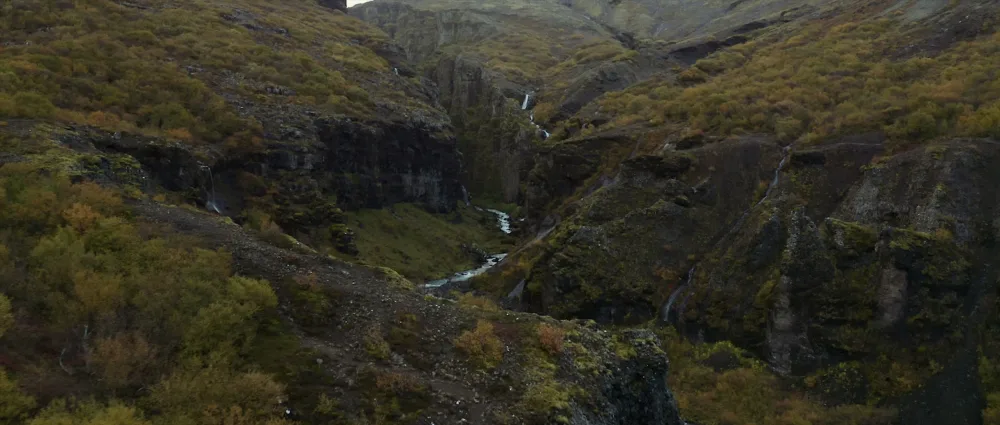
Winter: November to March
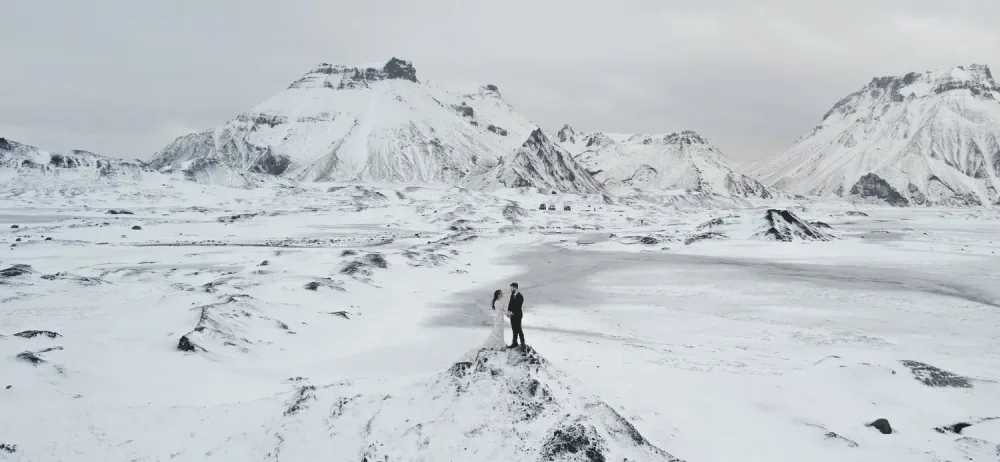
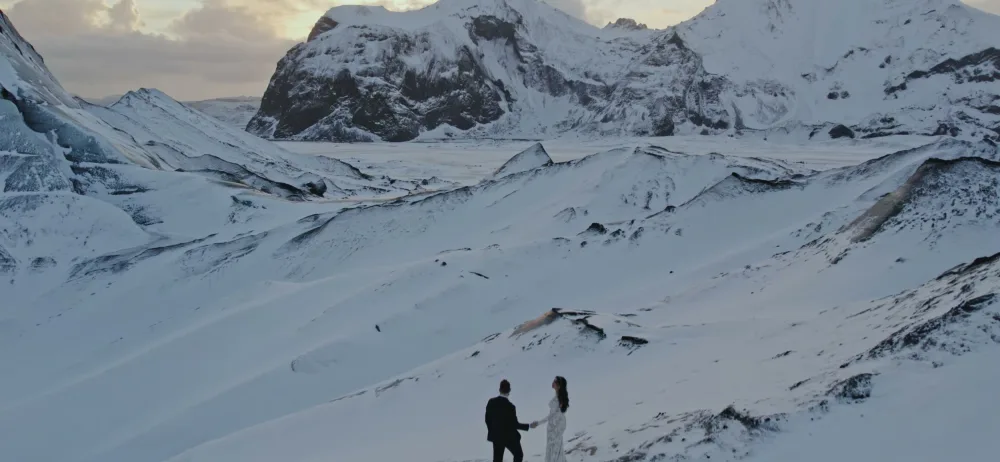
Winter is my secret favourite. Snow covers the black sand and the lava, the waterfalls freeze at the edges and the low sun turns the few hours of daylight into one long golden hour. It is the season of the blue ice caves in Vatnajökull, open with licensed guides from about mid-November to mid-March, and of the northern lights on clear nights.
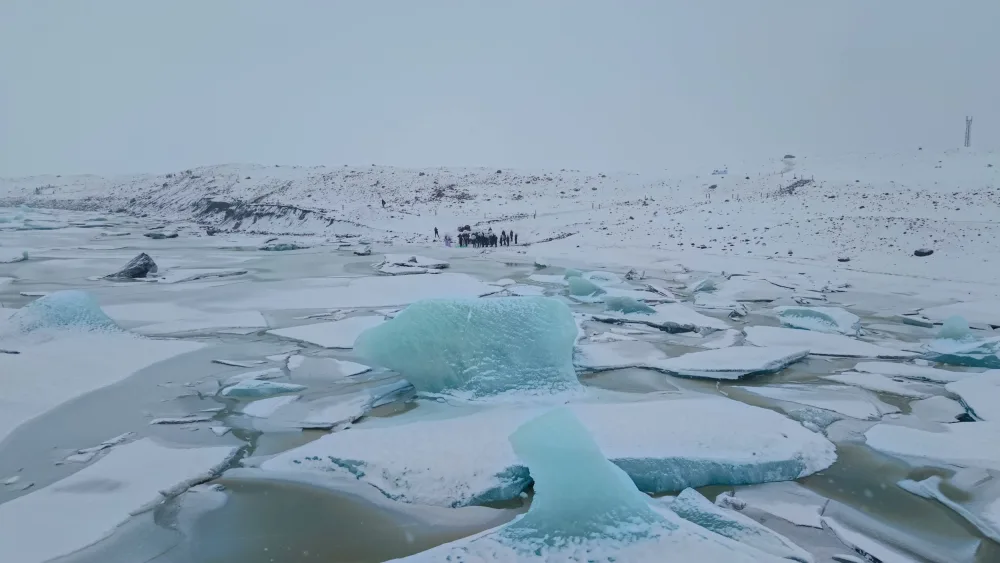
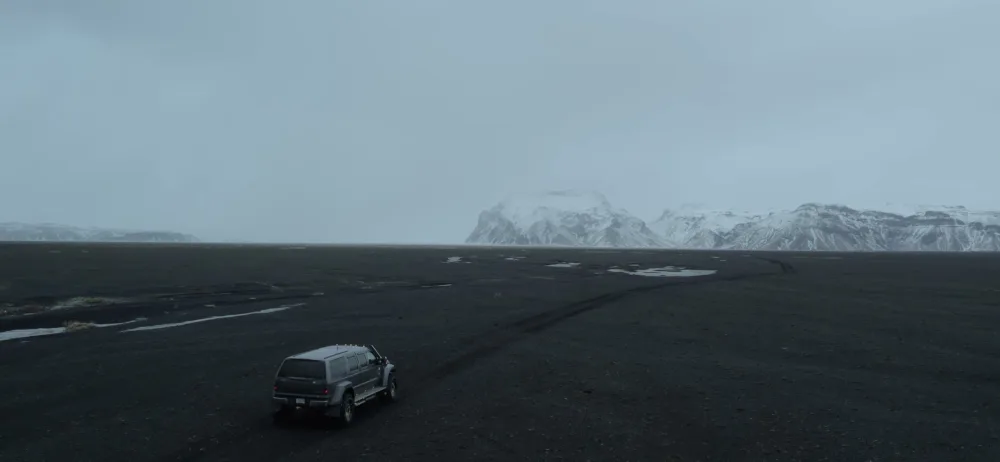
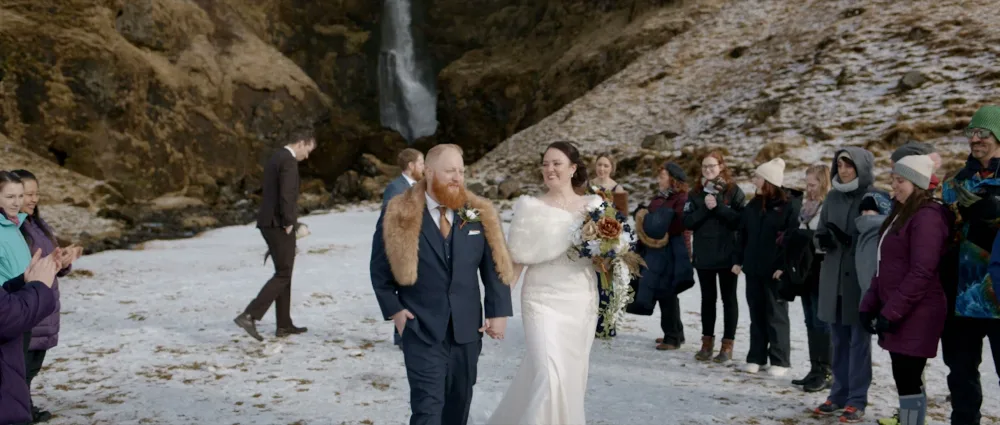
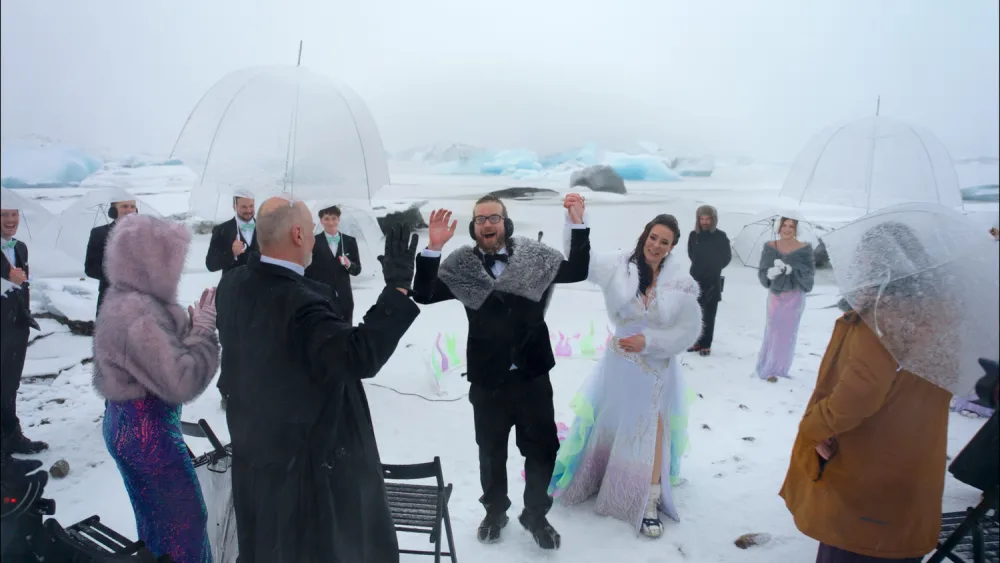
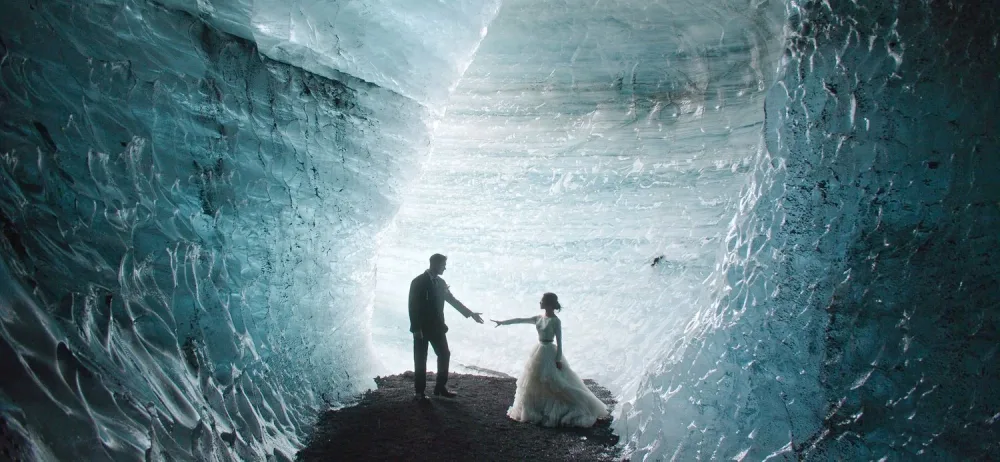
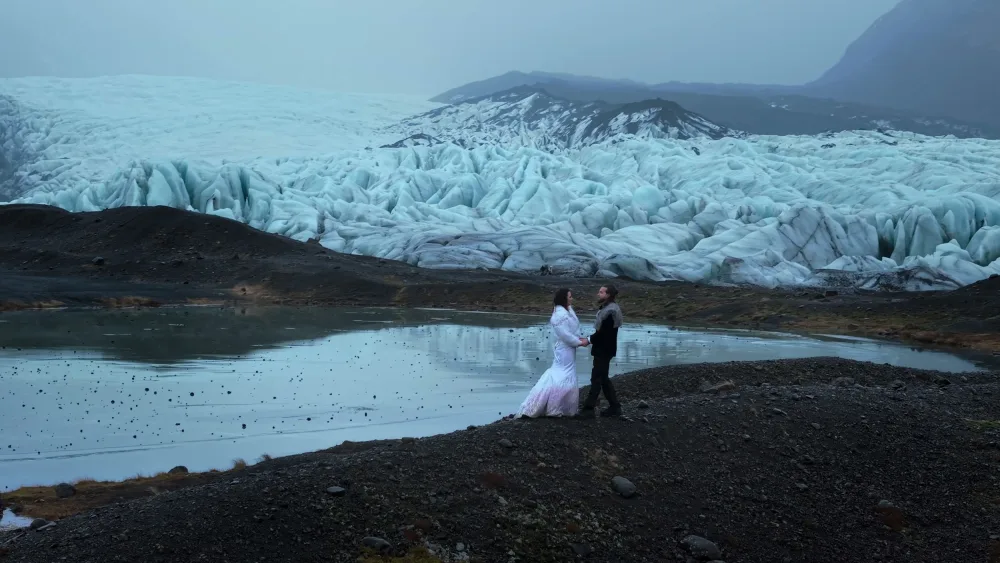
Lauren and Dave eloped in January and took a super-jeep across the snow to their ceremony in the Katla ice cave. Amanda and Lucas married in February on the frozen shore of Fjallsárlón glacier lagoon. In winter I plan one main place in the middle of the day and keep a spare day in case a storm closes the roads – read more in my guide to a winter elopement.
March
March is a lovely balance: there is still snow and the last of the ice cave season, but the days are as long as in Europe and the light is warm for hours. Sarah and Greg planned a spring elopement in March and woke up to fresh snow at Kvernufoss.
Spring: April and May
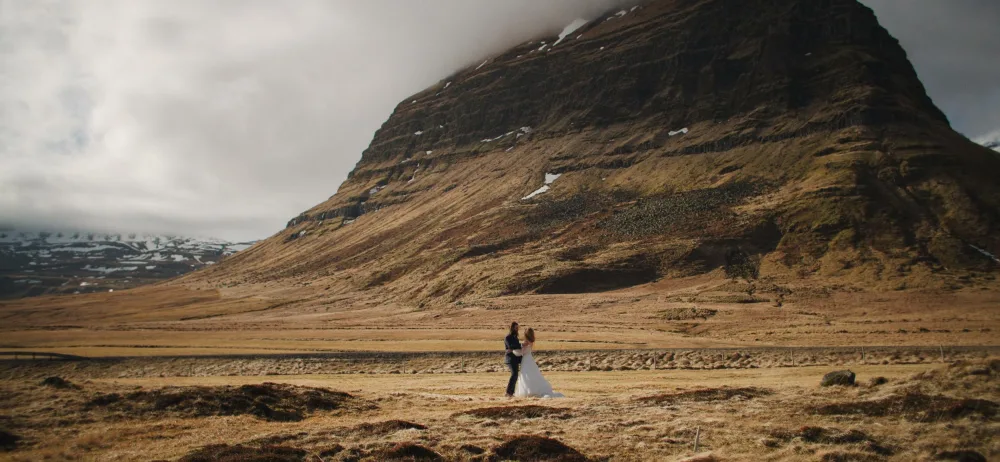
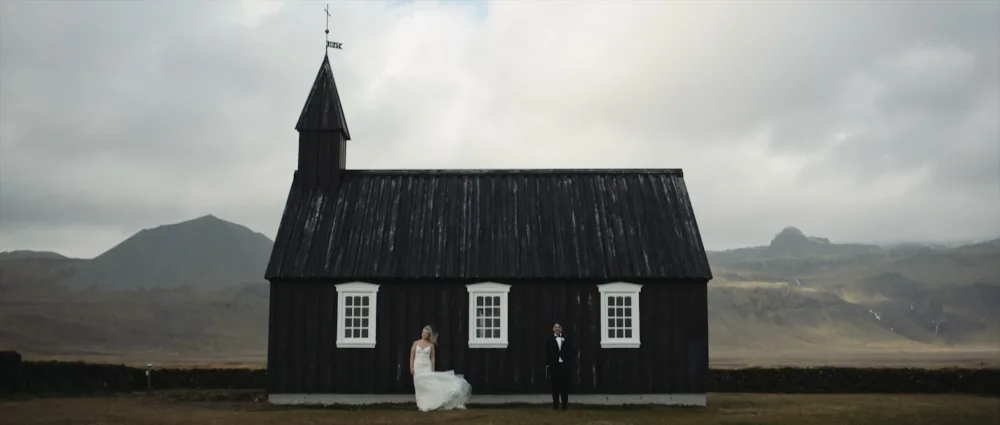
Spring is the most underrated time in Iceland. The roads are quiet, the days are getting long fast, and in late April the puffins return to the cliffs. There can still be snow in April – Julia and Logan eloped on Snæfellsnes in mid-April, at Búðir and Kirkjufell – while May brings the first green to the fields and almost no tour buses yet.
How to choose your month
- You want long days and green landscapes: June to August. Plan your ceremony early in the morning or late in the evening.
- You want the Highlands: July and August, when the F-roads are open.
- You want the northern lights: September to March – but never plan the wedding around them, see my guide to a northern lights elopement.
- You want ice caves: mid-November to mid-March for the Vatnajökull caves, or the Katla ice cave any time of year.
- You want quiet: May, September and October.
- You want snow: December to March, with a spare day in your plan.
Whatever the month, the weather in Iceland changes fast, so I always plan a sheltered alternative close by – a cave, a church or a cosy hotel. For the legal side and the paperwork, see how to elope in Iceland, and for ideas where to go, my guide to the best places to elope in Iceland.
Planning your elopement in Iceland?
Tell me your date and place – I’ll let you know if I’m free.
Check your dateQuestions about the best time to elope in Iceland
What is the best month to elope in Iceland?
When is the midnight sun in Iceland?
When can we see the northern lights at our wedding?
When are the ice caves open?
When are the Highlands open?
Is it a good idea to get married in Iceland in winter?
More places to get married in Iceland
All the best places to elope in Iceland · How to elope in Iceland