Scotland · Isle of Skye & the Highlands
Scotland & Isle of Skye Elopement Videographer
Green ridges dropping into the sea, lochs, waterfalls and a sky that changes every ten minutes – Scotland is one of the most beautiful places in Europe to elope, and one of the easiest to marry legally outdoors. I have filmed weddings and elopements in the Highlands and on the Isle of Skye since 2019, digitally and on Kodak Super 8.
- Legal outdoors
- A religious or belief ceremony, including humanist, can take place almost anywhere
- Notice
- Marriage notice (form M10) at least 29 days before – the Highland Council recommends 10–12 weeks
- Witnesses
- Two, aged 16 or over, present at the ceremony
- Getting to Skye
- Fly to Inverness or Glasgow and drive; the Skye Bridge has been toll-free since 2004
Edward and Breanna on the Isle of Skye
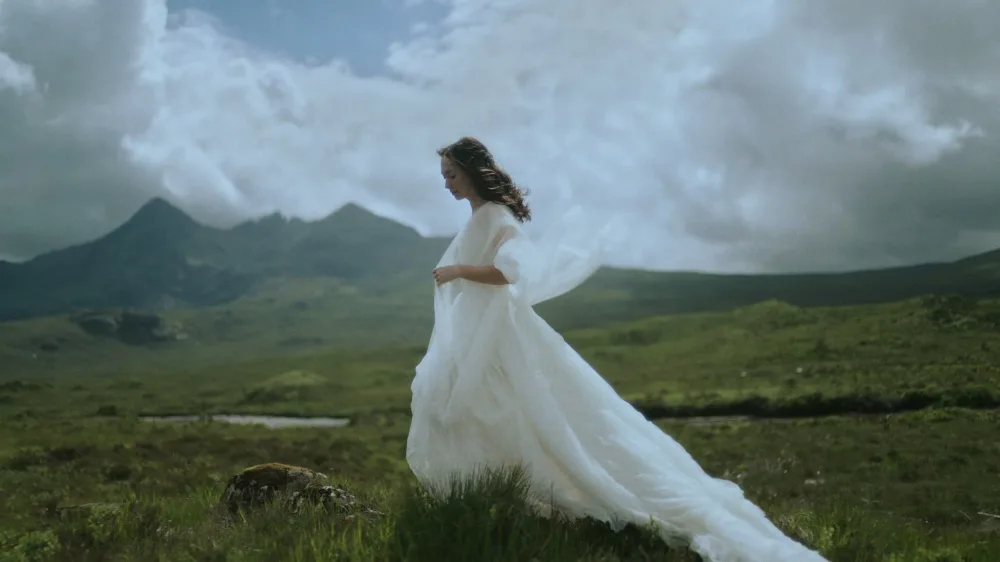
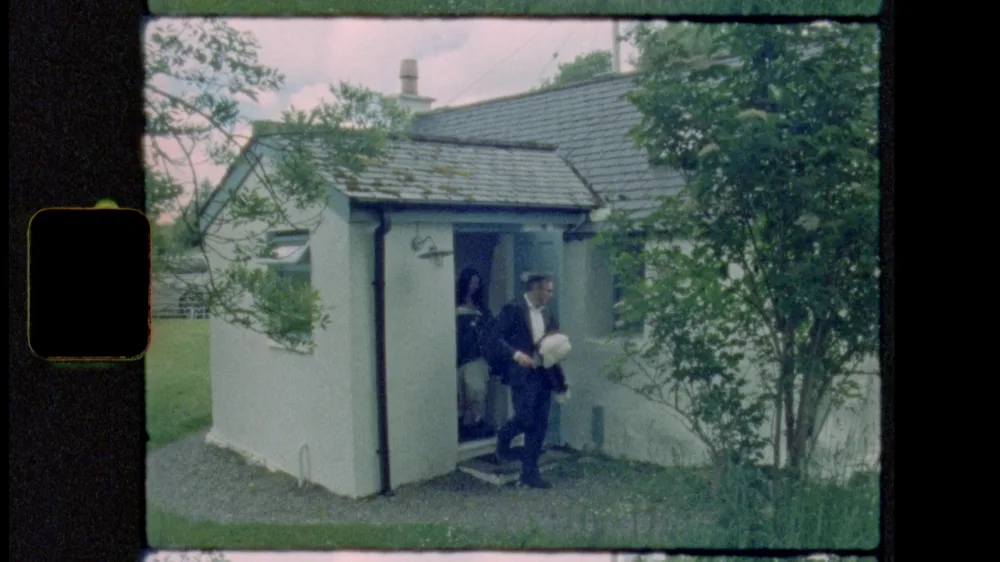
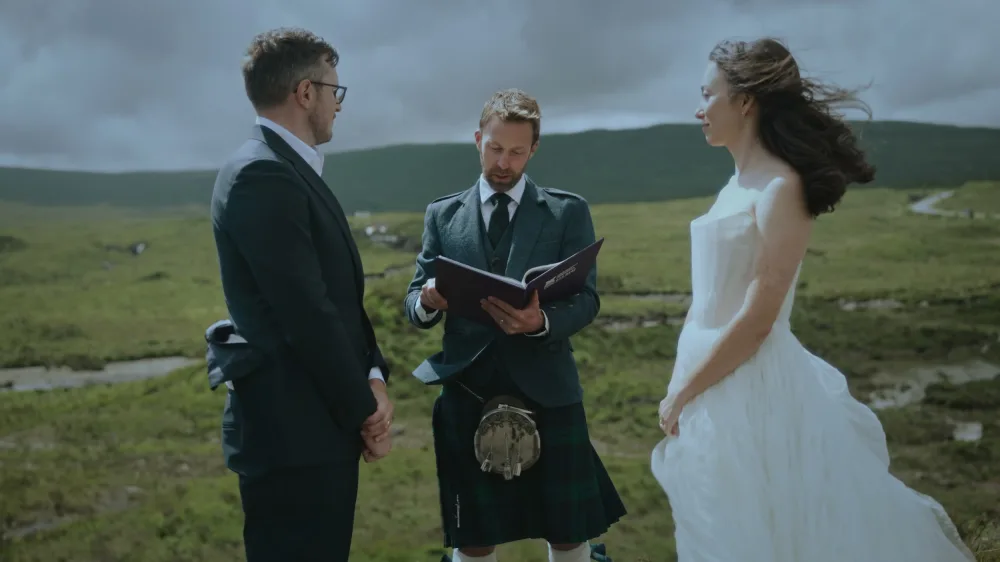
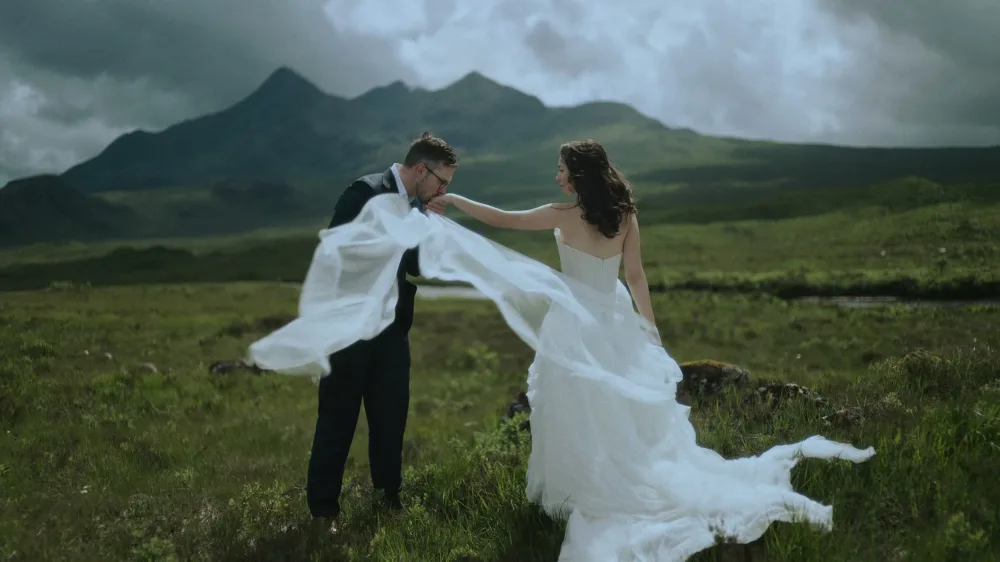
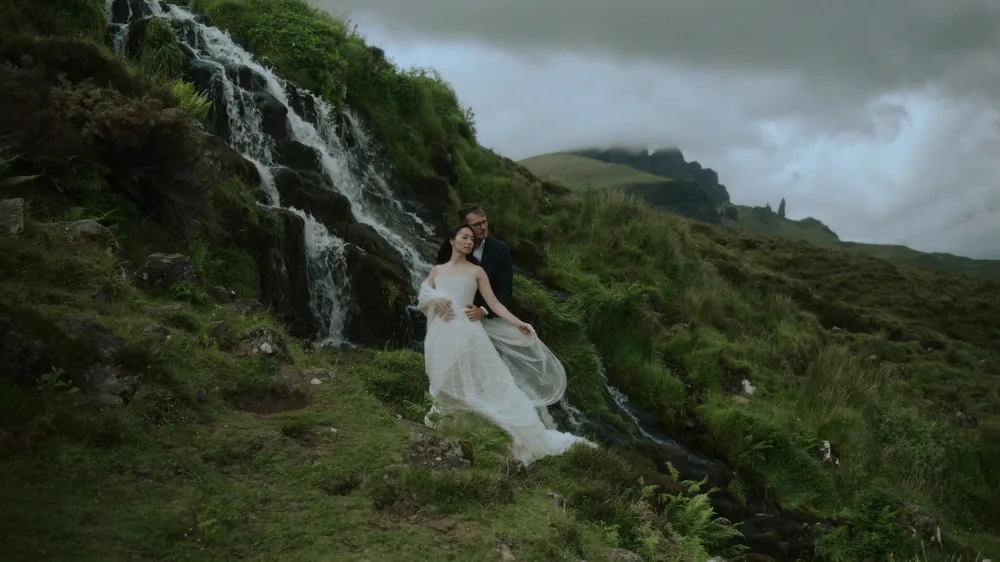
In June 2026 Edward and Breanna eloped on Skye. They got ready in a whitewashed cottage, Breanna wrote Edward a letter, and they drove out into the hills, where a Scottish celebrant in a kilt led their vows with the Cuillin mountains behind them and the wind pulling at the veil. After the ceremony they shared a toast from a quaich and spent the rest of the day exploring waterfalls and green ridges. I filmed it digitally and on Super 8, and the two weave together in their film.
Getting legally married in Scotland
Scotland is unusually open: a religious or belief ceremony – led by a minister, a priest or a celebrant, including humanist celebrants – can take place anywhere, from a hilltop to a beach, as long as the landowner agrees. A civil ceremony with a registrar can also be held outdoors. What you need:
- Marriage notice. Each of you completes form M10 and sends it to the registrar of the district where the ceremony takes place – for Skye, the Highland Council. Notice can be given at the earliest three months before and at the latest 29 days before the wedding; the council recommends 10–12 weeks.
- Documents. Birth certificate, passport and proof of address, plus divorce papers if you were married before, and certified English translations of anything in another language. If you are not a UK national, you also complete a Declaration of Status, and if you have lived in the UK for less than two years, you need a certificate of no impediment from home.
- A Marriage Visitor visa. Non-UK couples who are not settled in the UK need a Marriage Visitor visa to marry or give notice there – £135, applied for no more than three months before you travel. Irish citizens and holders of EU Settlement Scheme status are exempt.
- The Marriage Schedule. For a religious or belief ceremony, one of you collects it in person from the registrar no more than seven days before the wedding, everyone signs it at the ceremony, and it goes back to the registrar within three days.
Highland Council charges £45 per person to give notice. The rules and fees change, so check the current ones with the Highland Council and on gov.uk before you book. If the visa or the timing does not work for you, a symbolic ceremony on Skye with a legal marriage at home is just as beautiful.
Where to elope on Skye
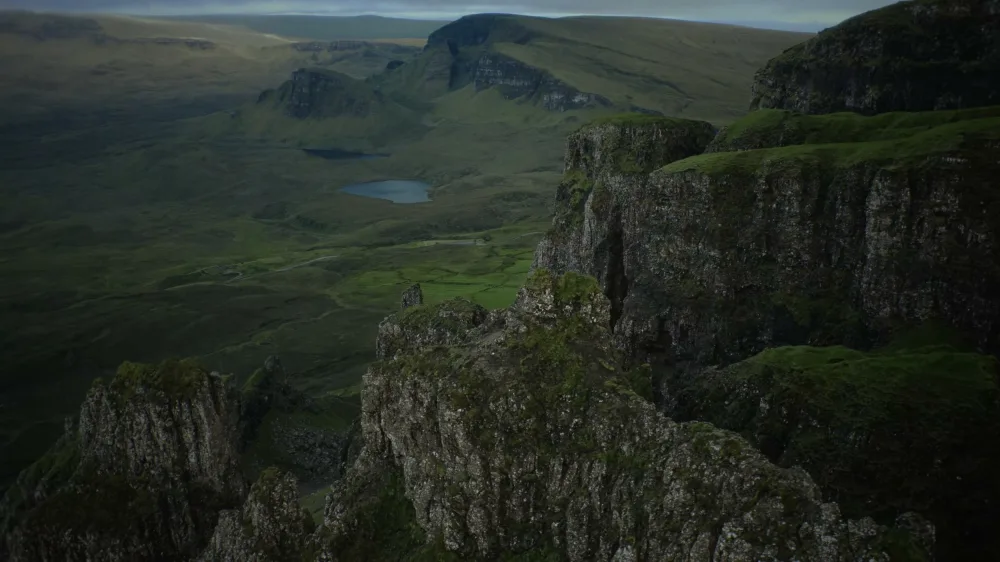
Skye is the largest island of the Inner Hebrides, and its wildest landscapes are the Trotternish ridge in the north – the Quiraing and the Old Man of Storr – the Fairy Pools below the Cuillin, and the cliffs at Neist Point. The best-known places are busy in summer and have paid car parks, so for the ceremony itself a quieter glen, lochside or waterfall nearby is often the better choice, with the famous views visited early in the morning or late in the evening, when the crowds are gone and the light is at its best.
When to go
Late spring and early autumn are lovely: long days, fewer visitors and wonderful light. Summer brings the longest evenings but also the midges – the tiny Highland biting flies that are worst from May to September on warm, damp, still days, especially at dawn and dusk – so pack a repellent and a breezy spot for the ceremony. Expect four seasons in a day at any time of year, and plan a little time between locations: many roads on Skye are single-track with passing places, and accommodation books up early.
Super 8 in the Highlands
Scotland’s soft, changing light is beautiful on film – Edward and Breanna’s film is shot partly on Kodak Super 8, woven together with the digital footage. More about analogue wedding films and Super 8 or digital.
Planning your wedding in Scotland?
Tell me your date and place – I’ll let you know if I’m free.
Check your date